Within the rusted surfaces of reclaimed metal, French artist Jérôme Peschard composes poetic fragments of memory, nostalgia, and urban transformation. Blending colonial echoes, Asian femininity, pop culture, and the restless rhythm of Saigon, his collections become visual diaries of a city suspended between disappearance and reinvention.
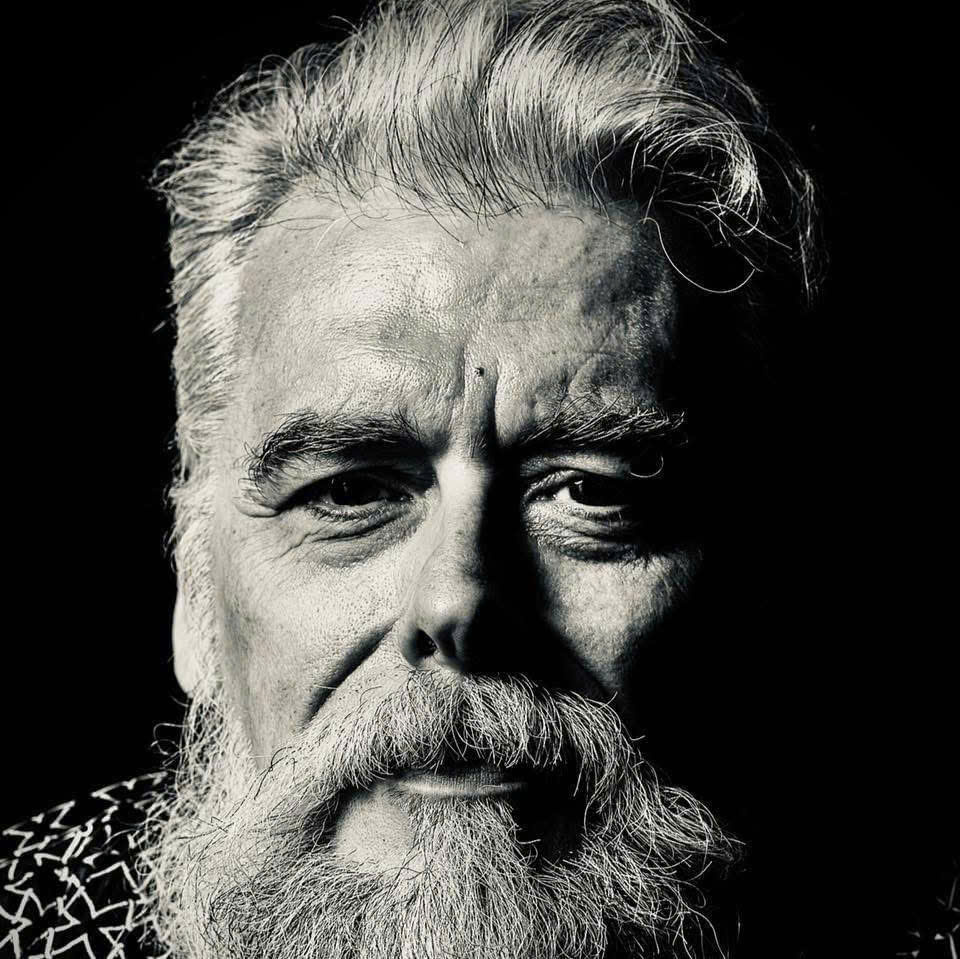
For Jérôme Peschard, art is not simply an act of creation. It is an act of preservation. In a city moving at the speed of reinvention, where old villas disappear behind mirrored towers and familiar streets dissolve beneath modern expansion, the French artist has devoted his work to capturing the fragile soul of Saigon before it fades entirely from memory. Through layers of rusted metal, vintage imagery, weathered textures, and cinematic compositions, Peschard transforms fragments of the past into deeply emotional contemporary works that exist somewhere between dream and documentary.
Based in Ho Chi Minh City for more than a decade, Jérôme Peschard has become one of the most distinctive artistic voices within Vietnam’s contemporary art landscape. Entirely self-taught, his path did not begin in traditional ateliers or academic institutions, but through graphic storytelling, visual experimentation, and digital culture. Before dedicating himself fully to painting, he spent years immersed in the worlds of comics, multimedia, and gaming, notably serving as Creative Director and CEO of Ankama Group in France, the studio behind the internationally renowned online game Dofus.
Yet it was Vietnam that transformed his artistic language. Arriving initially for professional reasons, Peschard found himself mesmerised by the contradictions of Saigon: a city both tender and chaotic, nostalgic yet relentlessly modern. Beneath the energy of motorbikes, neon lights, cafés, and crowded boulevards, he discovered an emotional landscape haunted by traces of another era. French colonial architecture, fading signage, forgotten cinemas, rusted shutters, and weathered walls became silent witnesses to a disappearing identity.
Rather than painting on traditional canvas, Peschard chose the city itself as his medium. His signature works are created on reclaimed corrugated iron sheets salvaged from construction sites throughout Ho Chi Minh City. Marked by oxidation, scratches, dents, and layers of time, these industrial surfaces already carry the memory of urban transformation long before the first brushstroke appears. In his hands, rust becomes poetry.
The material is never incidental. It breathes with the artwork. Each corroded surface evokes the fragility of memory itself: imperfect, layered, and slowly eroding. Rather than concealing these scars, Peschard embraces them, allowing the textures of decay to interact with portraits, typography, architecture, and colour. The result is a visual tension between beauty and deterioration, permanence and disappearance.
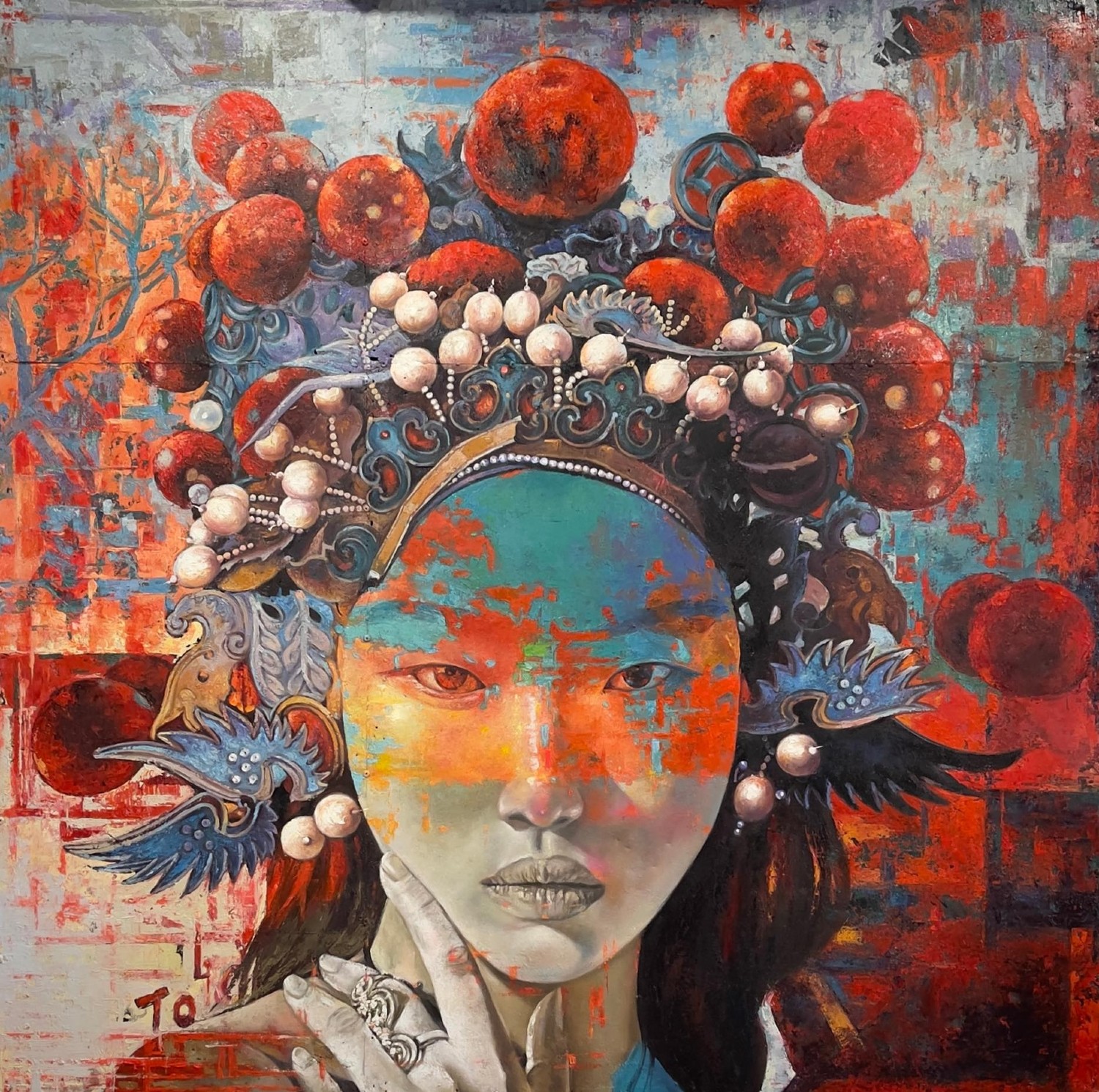
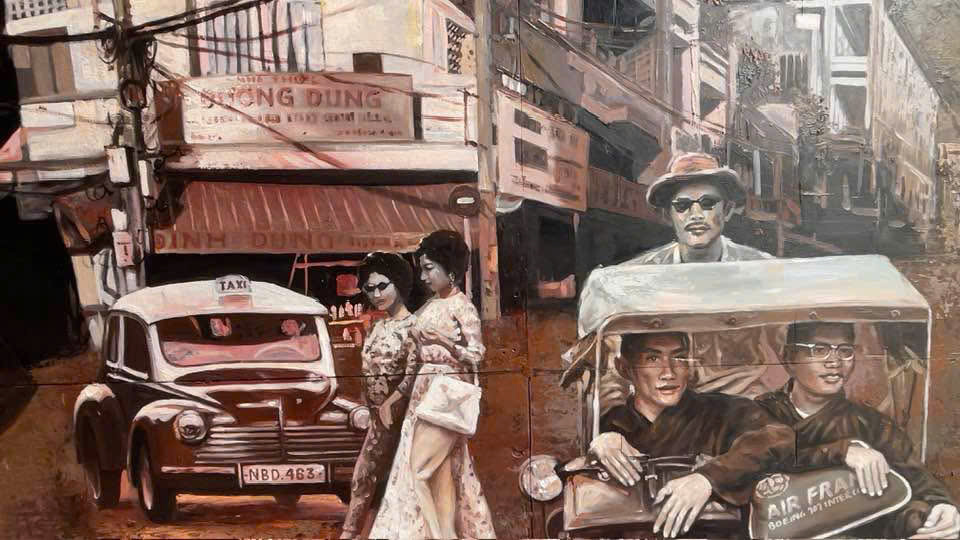
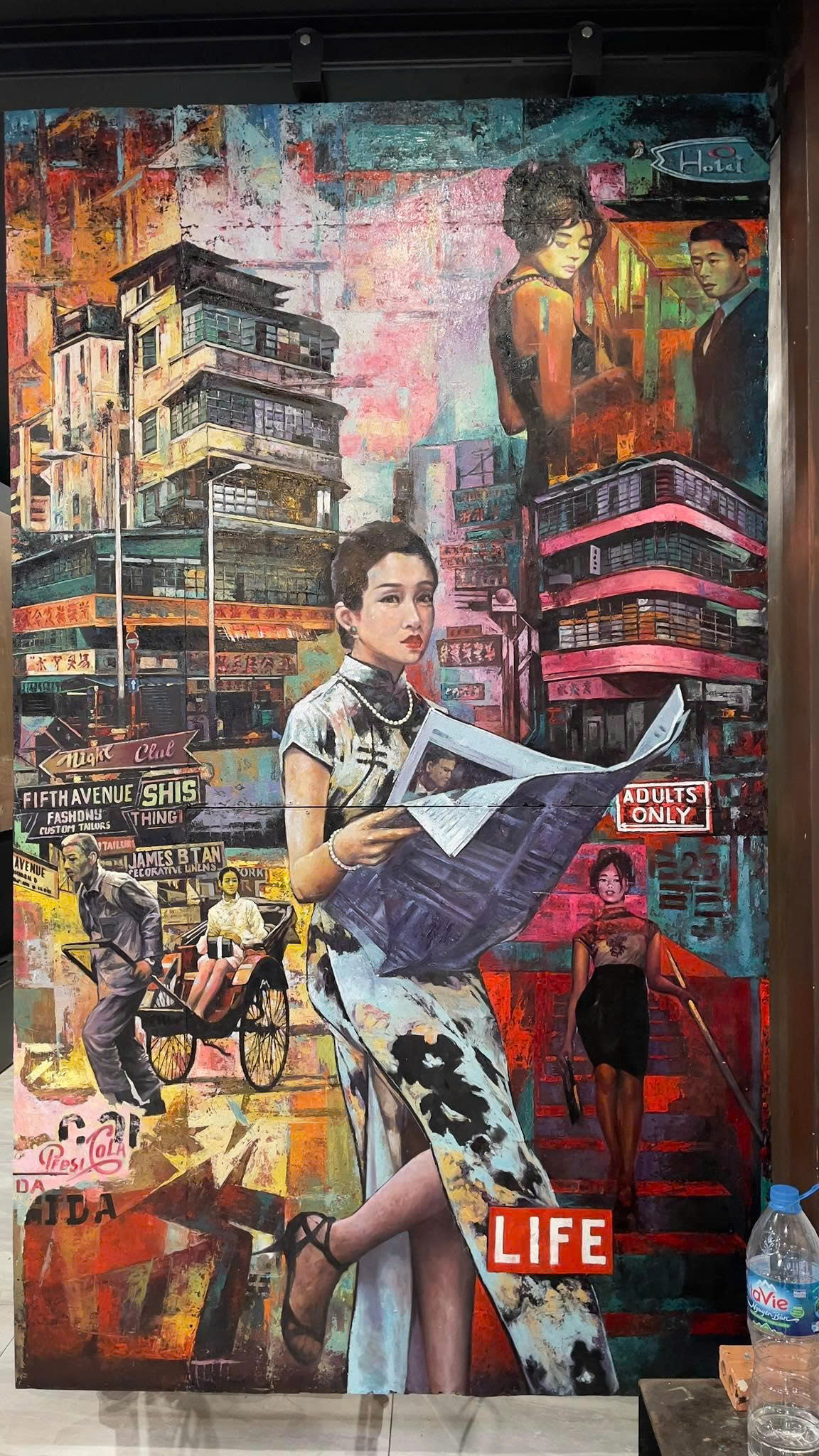
Among his most recognisable collections are his imagined portraits of Saigon, where elegant Vietnamese women drift through dreamlike urban scenes populated by vintage automobiles, colonial façades, neon signs, café culture, and fragments of old Indochina. The feminine figure occupies a central role within his universe. Often dressed in áo dài, his subjects embody grace, sensuality, and quiet resilience—appearing almost like spirits wandering through the memory of the city itself.
There is something profoundly cinematic about his compositions. One senses echoes of Wong Kar Wai, old French travel posters, retro Americana, Japanese manga, and 1970s pop culture colliding within the same visual frame. Yet despite these influences, the work remains unmistakably rooted in Vietnam. Peschard does not romanticise Saigon through nostalgia alone; he captures its layered complexity—its elegance and exhaustion, its beauty and impermanence.
His collections often feel less like paintings and more like emotional archives. In works infused with collage-inspired techniques and pop aesthetics, fragments of typography, advertisements, comic references, and urban symbolism overlap like memories resurfacing from another lifetime. These layered narratives reveal his fascination with visual storytelling, where every detail becomes part of a larger psychological landscape.
Technology also plays an essential role in his process. Before touching paint to metal, Peschard carefully constructs digital compositions, layering references, photography, colours, architecture, and symbolic elements through graphic software. These digital foundations are then translated into physical artworks through oil painting and mixed media interventions. Some pieces incorporate neon installations, extending the dialogue between memory and modernity even further.
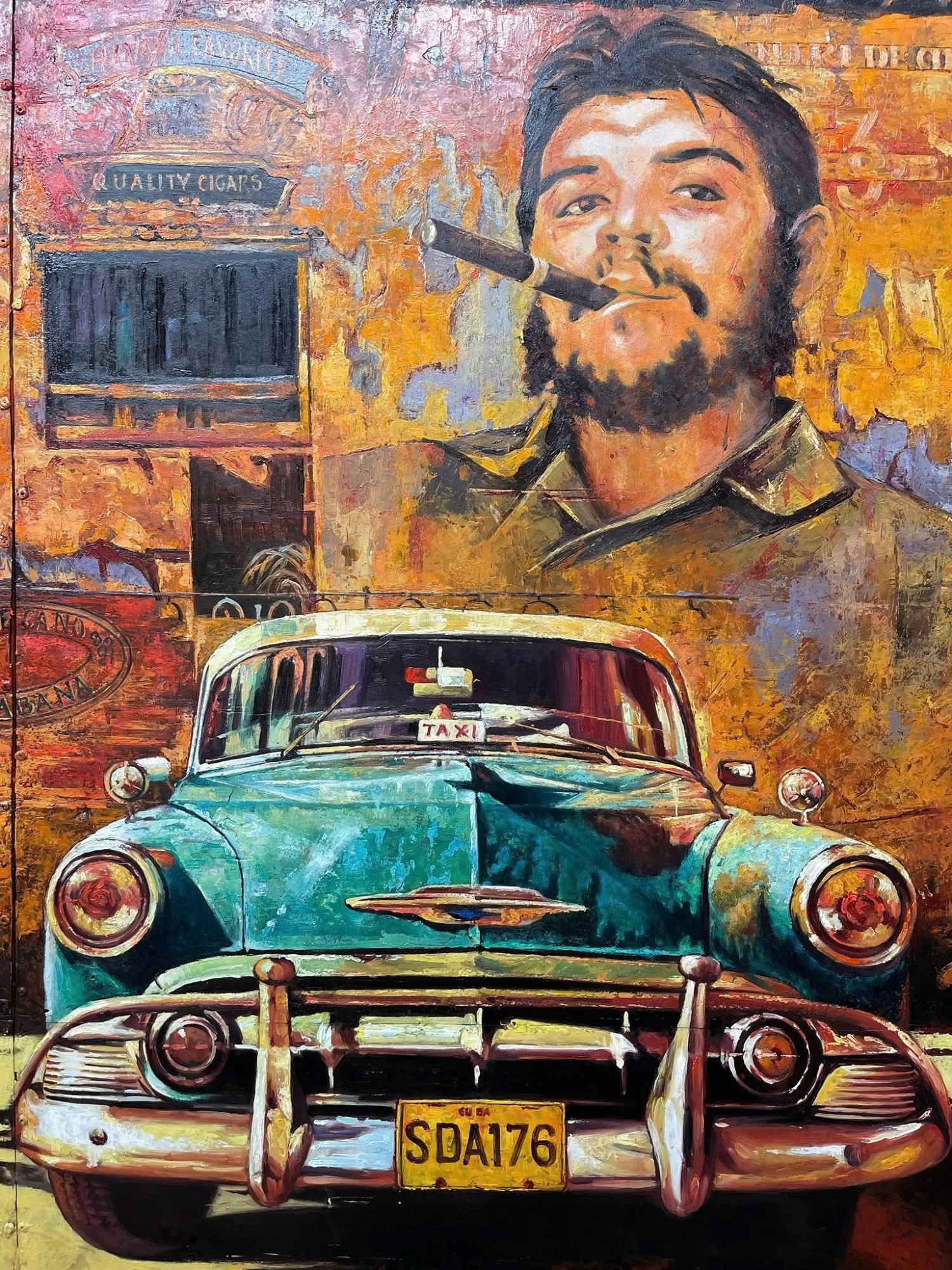
Yet beyond technique and aesthetic sophistication lies the emotional core of his work: the fear of forgetting. Saigon, as Peschard portrays it, is never static. It flickers between past and present like an old film reel slowly dissolving under light. Buildings vanish. Streets transform. Cultures evolve. But through his collections, fragments remain suspended in time.
There is a quiet melancholy within this preservation. His rusted surfaces resemble wounded walls that still remember the voices, stories, and lives once held within them. Every scratch, every oxidised stain, every faded layer becomes part of the narrative. In transforming discarded metal into contemporary art, Peschard gives new life to materials already abandoned by the city’s relentless evolution.
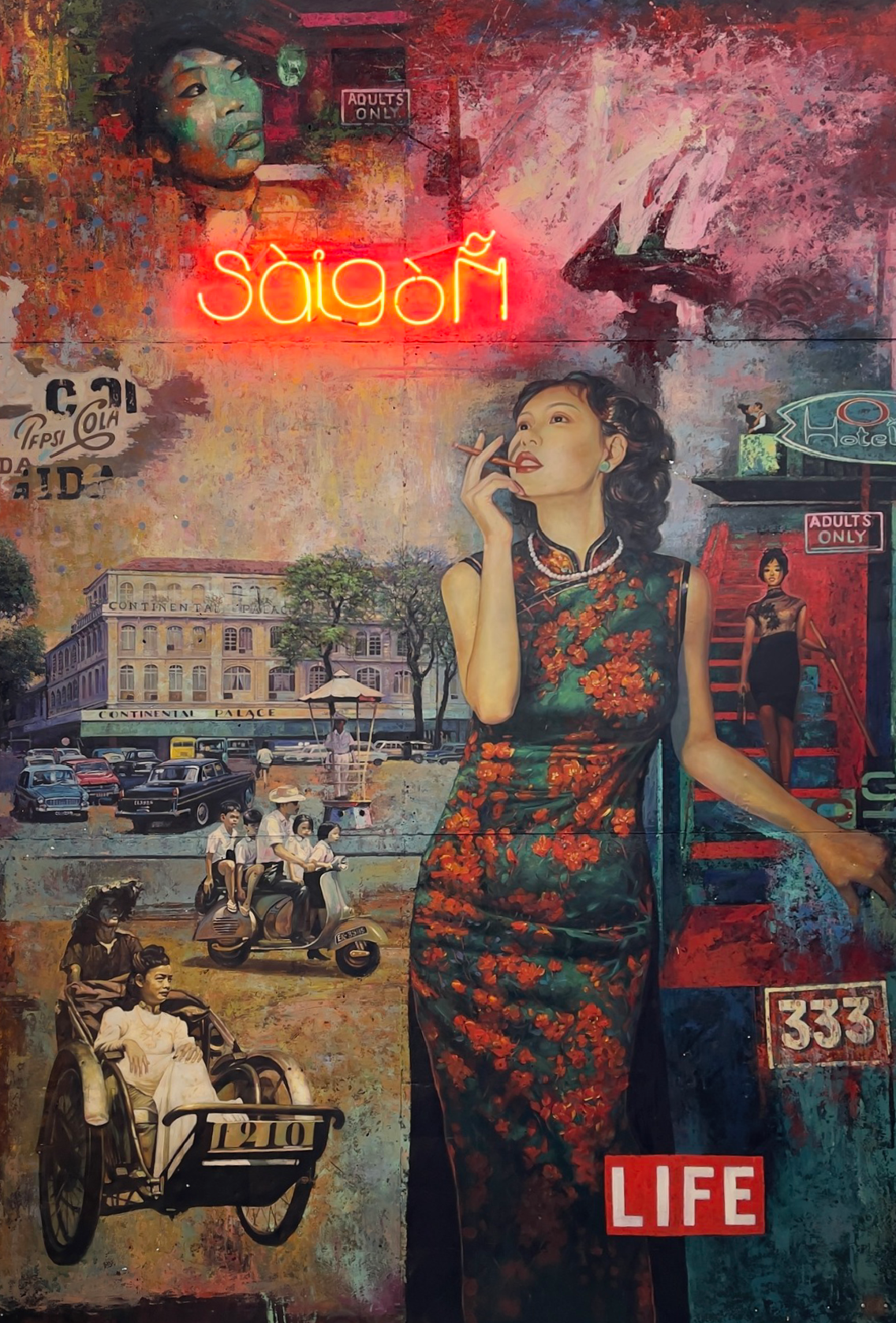
Today, from his studio in Thảo Điền, Jérôme Peschard continues to build a body of work that resonates with collectors not only for its visual boldness, but for its emotional intimacy. His art transcends decorative contemporary pop aesthetics to become something far more human: a meditation on memory, identity, and the fragile beauty of places that refuse to disappear entirely. Through rust, colour, and nostalgia, Jérôme Peschard does not simply paint Saigon. He remembers it.