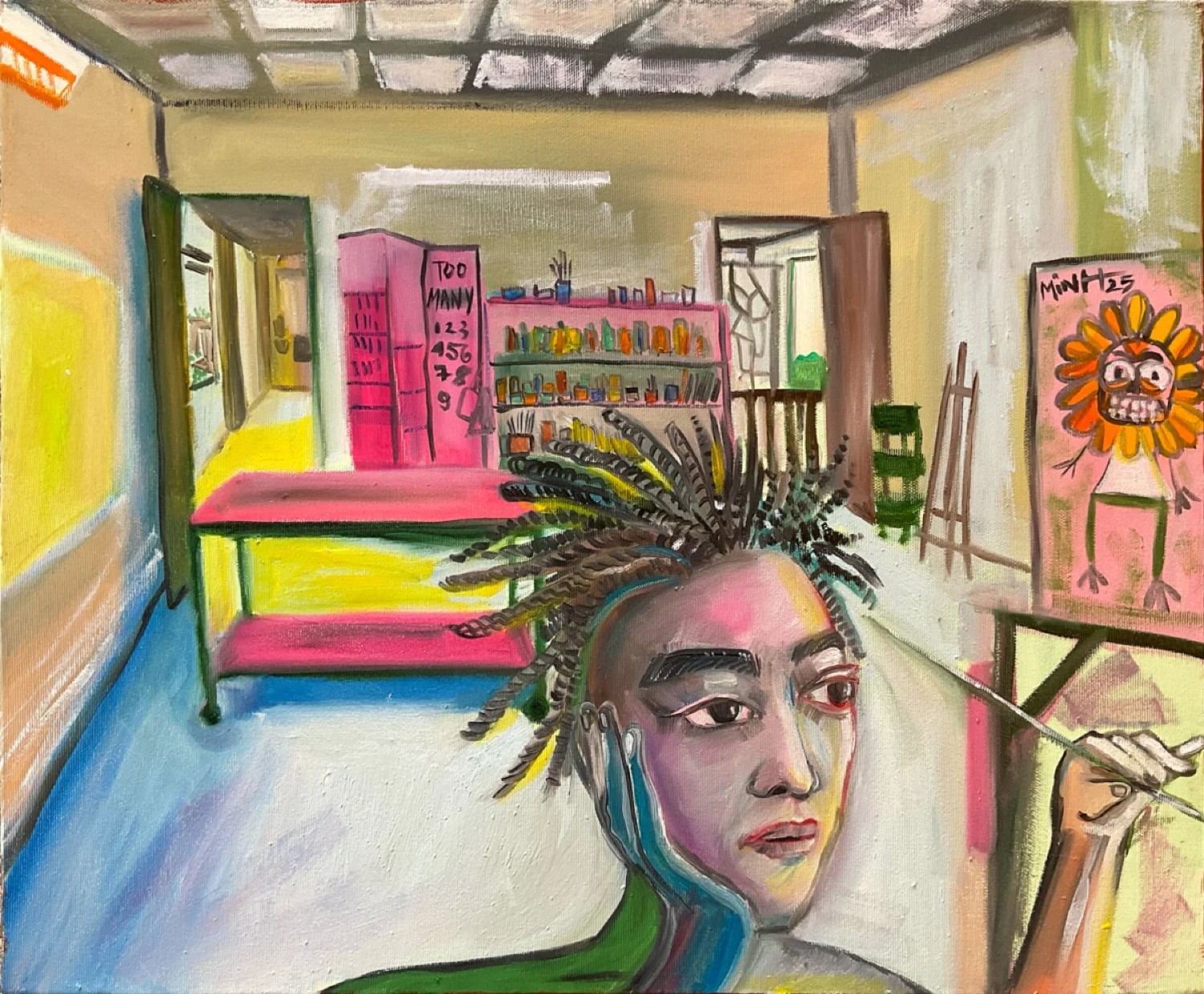
Through mopeds, buffaloes, bicycles, portraits, murals, and recurring symbolic characters, Vietnamese artist Nguyen Trinh Quang Minh turns everyday objects into vessels of memory and movement. Spanning painting, sculpture, writing, and public art, his practice is built on discipline, experimentation, and the transformation of inherited stories into a personal visual language.
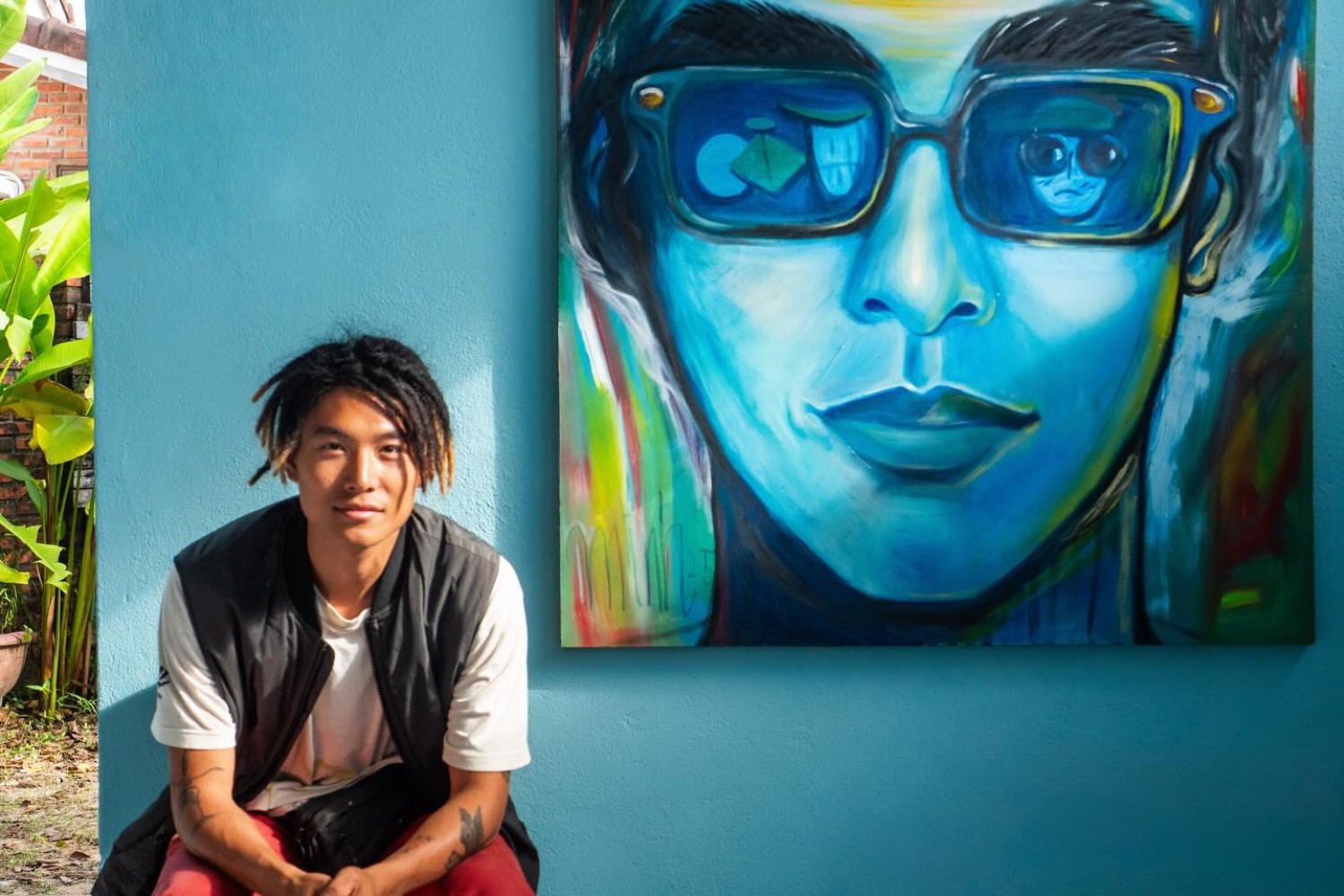
For Nguyen Trinh Quang Minh, art often begins with a simple act repeated until it reveals something larger.
A motorbike drawn every day. A face captured in a few spontaneous minutes. A buffalo’s head appearing unexpectedly within the curve of a bicycle wheel. From these ordinary beginnings, Minh has shaped a practice rooted in observation, memory, and cultural storytelling. Based in Vietnam, he works across painting, sculpture, murals, and writing, approaching art not as a fixed style but as an open field of exploration.
Entirely self-driven in his artistic education, Minh has spent more than seven years learning through books, courses, the Internet, and constant practice. Coming from a generation surrounded by endless images and creative noise, he had to teach himself not only how to draw and paint, but how to stay focused. To become an artist was his choice; to continue becoming one remains his discipline.
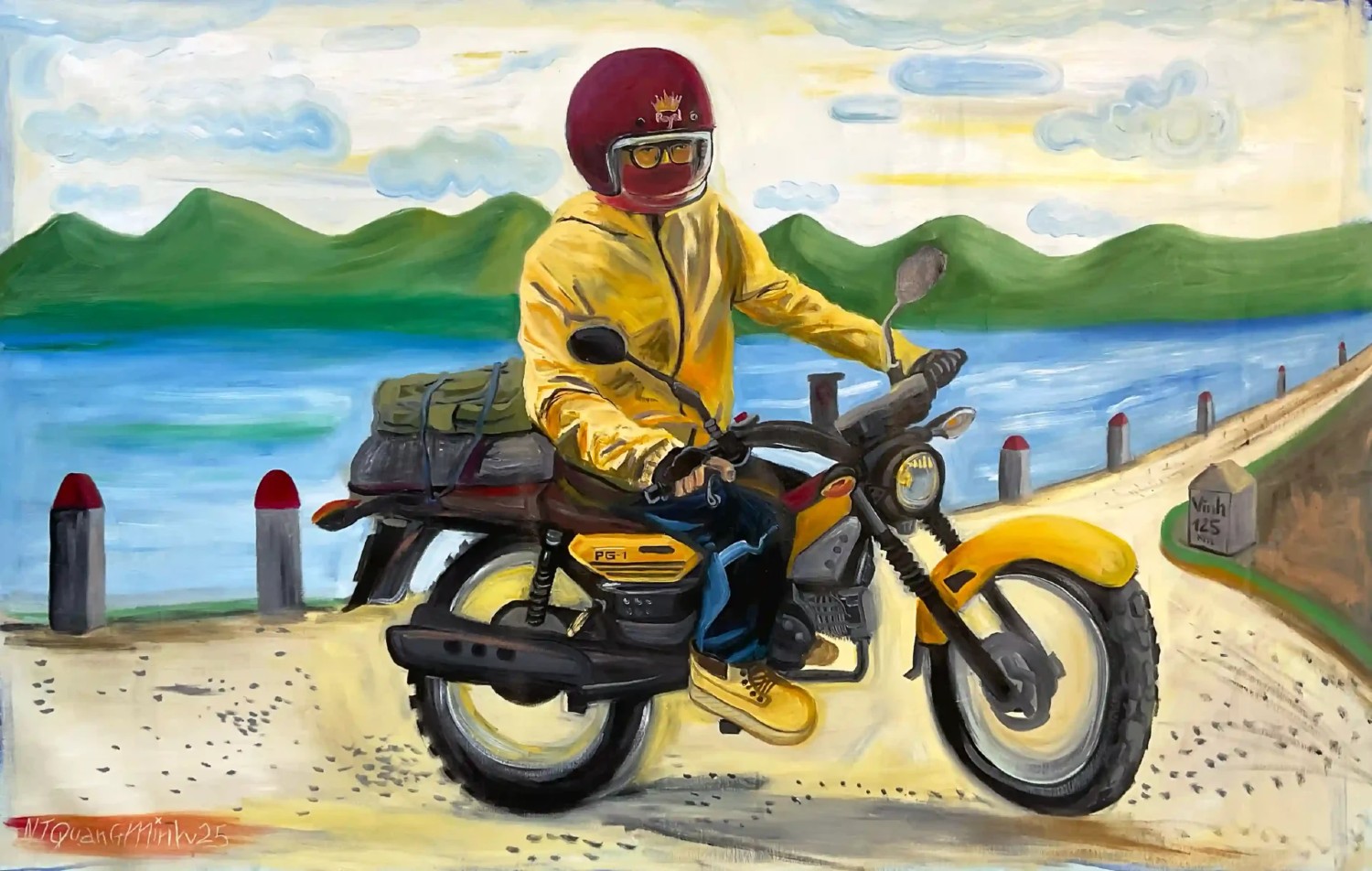
That discipline is most clearly seen in his 365 Moped Drawings project, created from 2021 to 2022. As a novice artist, Minh set himself one rule: draw one thing every day for a year. He chose his Yamaha Future V, a 25-year-old moped bought in 1996, and drew it daily from April 2021 to April 2022. Later, he also began drawing his girlfriend’s 100cc Honda Win.
At first, the project was about practice, attention to detail, and the pleasure of repetition. The motorbike itself was neither rare nor fashionable. Yet through daily drawing, it began to reveal another kind of beauty, one shaped by use, endurance, repair, and survival. More importantly, it carried traces of the men in Minh’s family: his grandfather, who had saved for years to buy it; his father, who once rode it across the country; his uncle, who lost it for a time to the pawnshop. Eventually, the moped returned to Minh.
The object became a vessel of inheritance. By drawing it again and again, Minh was not only studying form. He was also confronting pride, restlessness, loss, resilience, and memory. These emotions became part of the machine itself, as if the motorbike contained both movement and family history. Through drawing, remembering, and reworking, Minh began to transform what he had inherited into something of his own.
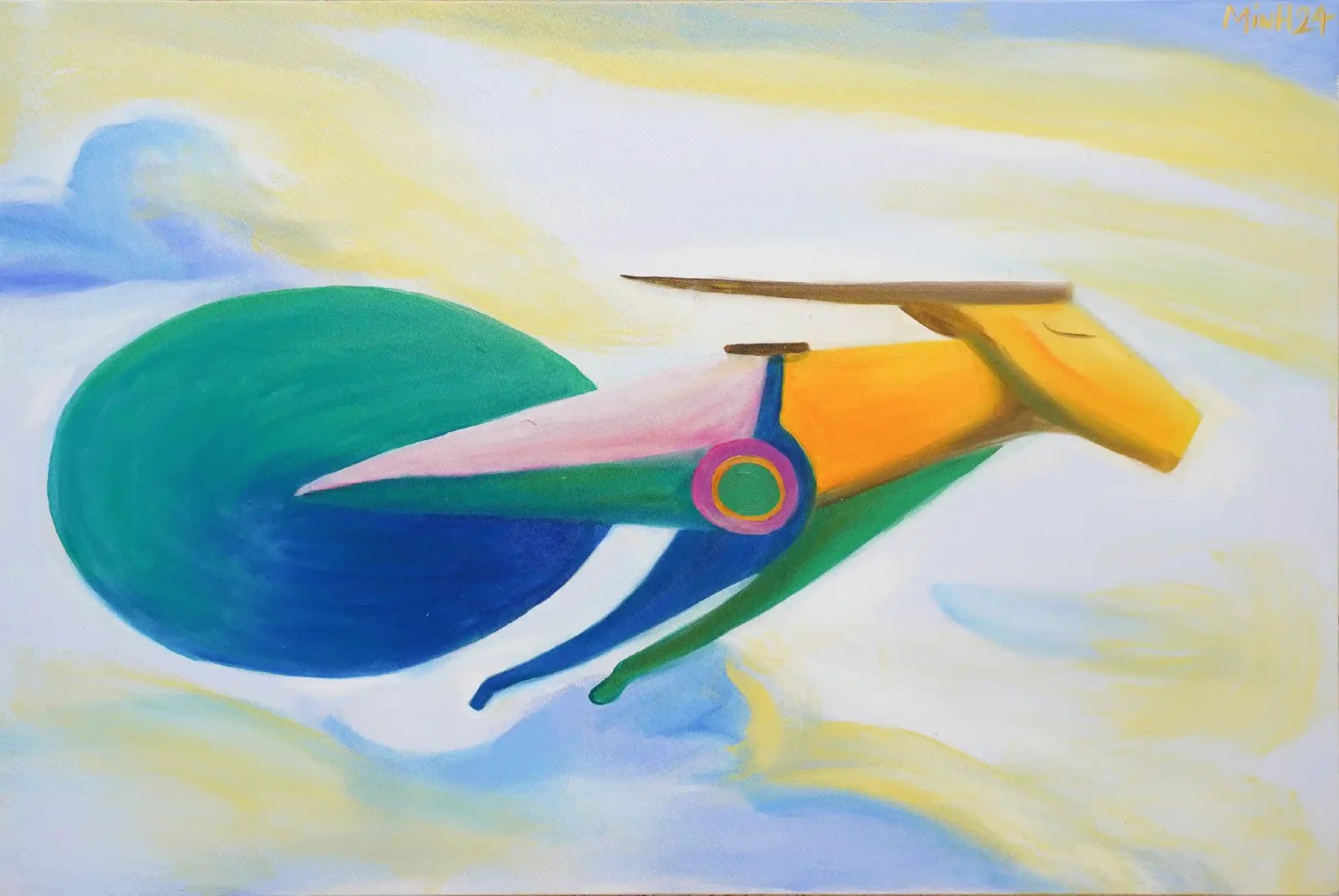
The same symbolic impulse runs through Cowcycle, his original character and one of the clearest expressions of his artistic identity. Formed from cow and bicycle, Cowcycle is, in Minh’s words, more a work of symbolism than biology. Its roots lie in the Vietnamese proverb “Con trâu là đầu cơ nghiệp,” where the buffalo represents labour, land, endurance, and family fortune. The bicycle, especially in northern Vietnam during the 1970s and 1980s, was once a treasured household possession.
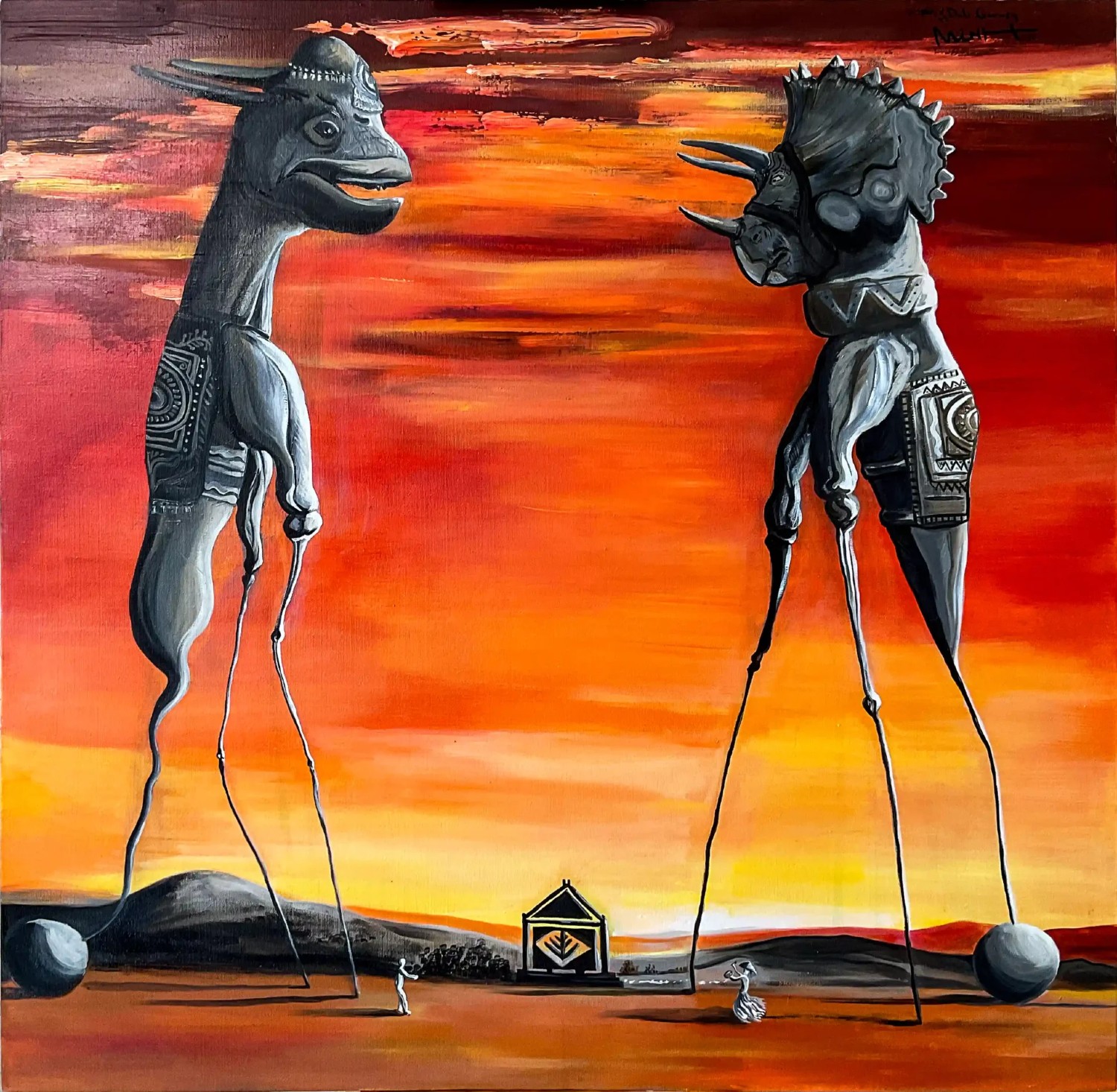
In Cowcycle, these two images merge into a figure that feels both grounded and in motion. Alive, resilient, rural, and mechanical, it becomes Minh’s personal symbol of Vietnam-ness: a creature carrying the memory of the past while moving toward an industrial future. The idea appeared while he was sketching a friend’s bicycle; halfway through the back wheel, the shape of a buffalo’s head suddenly emerged. From that accident, Minh developed around 30 oil and acrylic paintings, along with a sculpture made from a rusted bicycle.
Through this singular character, he experiments with cubism, surrealism, realism, and welding. Yet Cowcycle is never only a formal exercise. It allows Minh to speak about transformation, cultural memory, and the strange poetry of ordinary things.
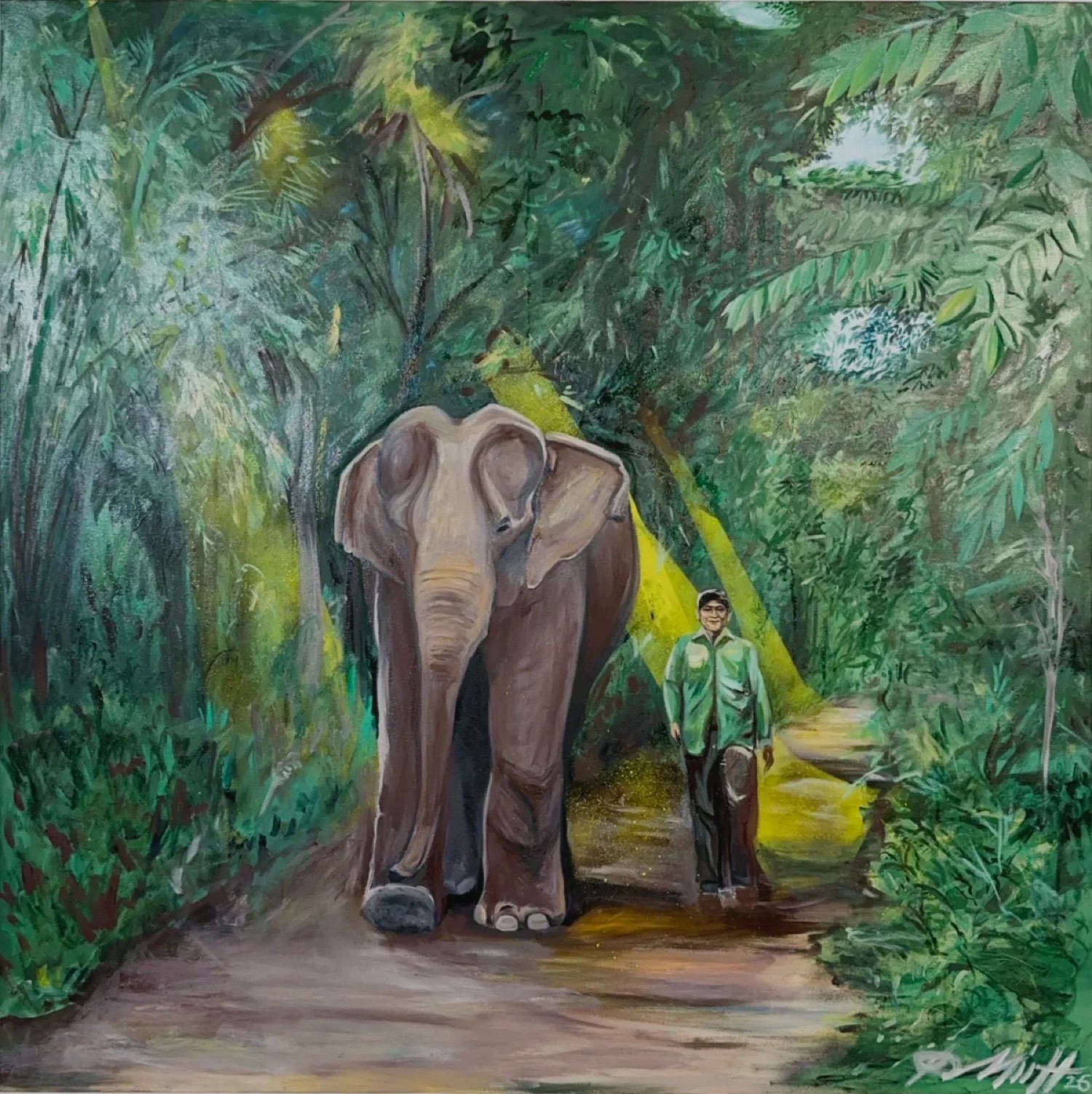
A major turning point came in 2022, when Minh travelled to Colombia with his wife, Viviana Ruiz Gomez. Encountering a world profoundly different from Vietnam, and seeing the paintings of Fernando Botero, expanded his understanding of how humour, form, exaggeration, and cultural identity could become artistic language. After returning, he and Viviana married in Hanoi, then moved to Hội An in search of a different rhythm of life.
In Hội An, Minh’s practice opened outward. In 2023, he completed 365 Portraits in 2023, creating one spontaneous portrait every day, often within five to sixty minutes. If the moped project deepened his relationship with one inherited object, the portrait project brought him closer to human presence, instinct, and emotional immediacy.
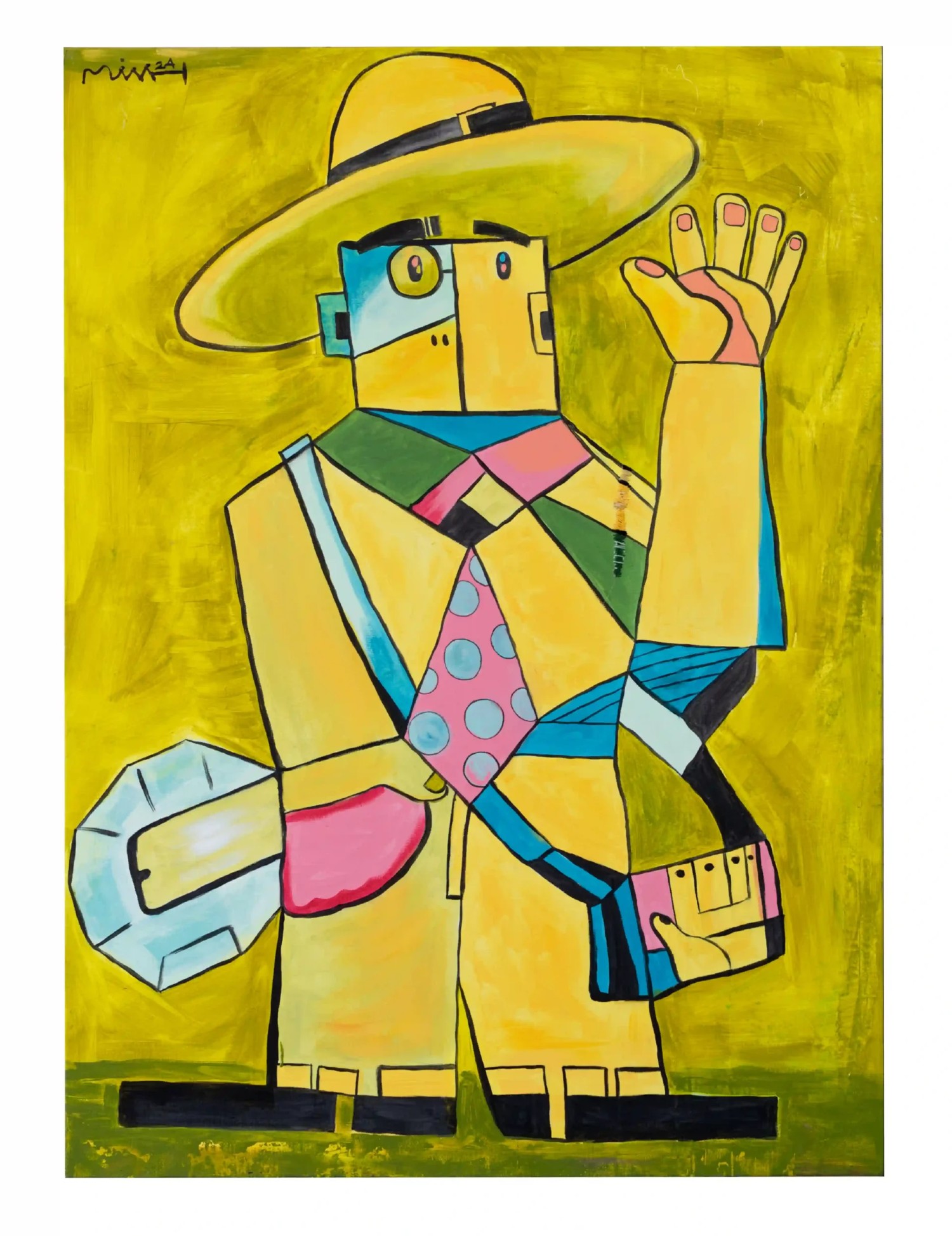
Beyond the studio, Minh has painted murals around Vietnam, taught art at Palm River Academy, guided photography tours, restored mosaics, curated student exhibitions, and participated in group and solo exhibitions across Hội An, Hà Nội, and Đà Nẵng. These experiences keep his work close to people, place, and lived experience.
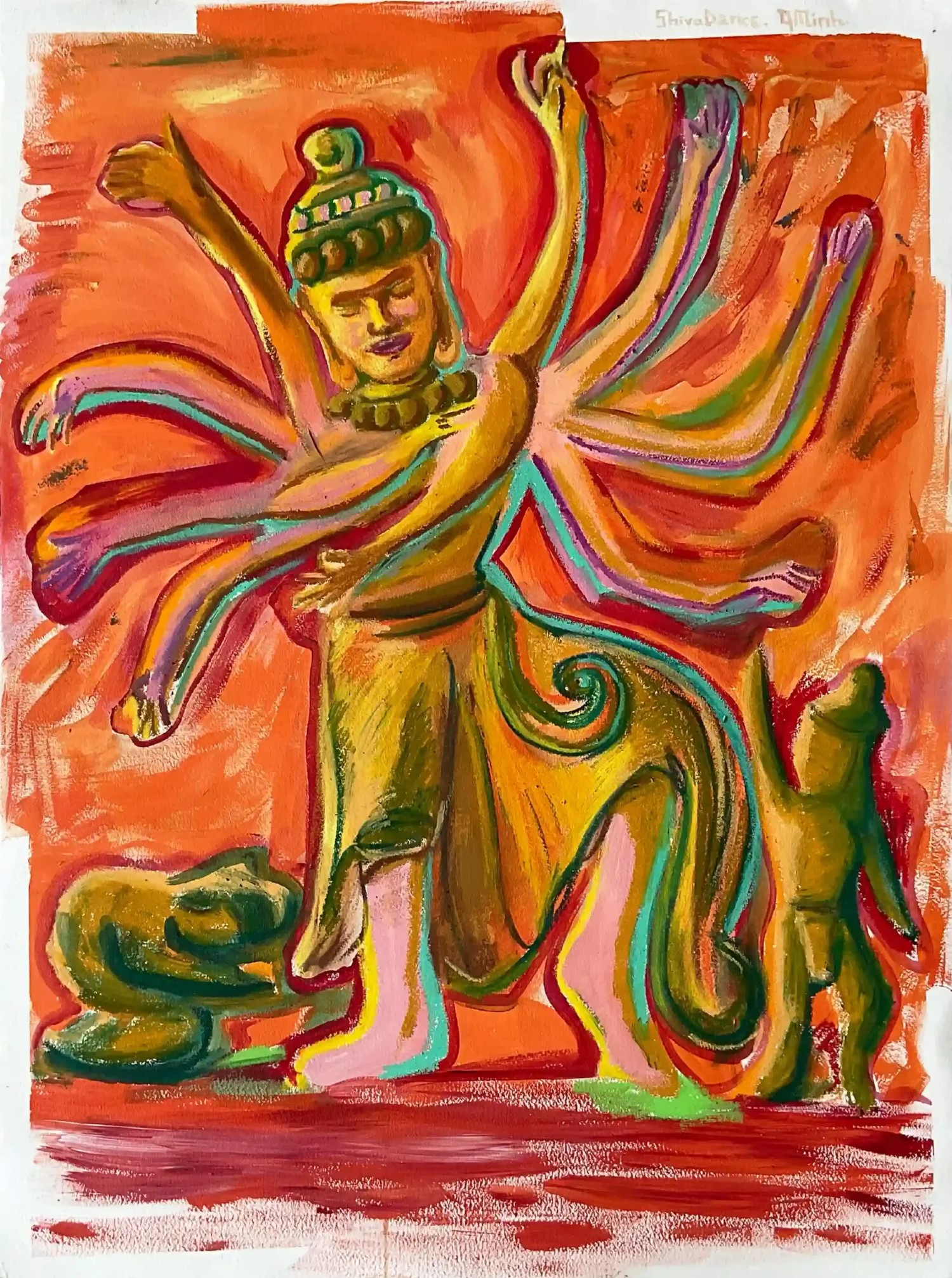
Today, as a full-time artist, Minh continues to paint through uncertainty. Before settling into one specific style, he works through collected sketches, unfinished ideas, and many subjects on canvas, asking a central question: now that he can speak visually, what does he want to say?
Perhaps this question is what gives his art its emotional honesty. He does not treat memory as something still. He draws it, repeats it, reshapes it, welds it, paints it, and sends it forward.