Few names in Champagne carry the quiet gravitas of Maison Ruinart. Founded in 1729 as the world’s first commercial champagne house, Ruinart has long embodied a lineage where artistry meets oenological mastery. Yet in a bold gesture toward the future, the maison has unveiled a contemporary architectural statement that reframes its storied past through a lens of innovation, sustainability, and experiential immersion. This is not simply a renovation. It is a reawakening.
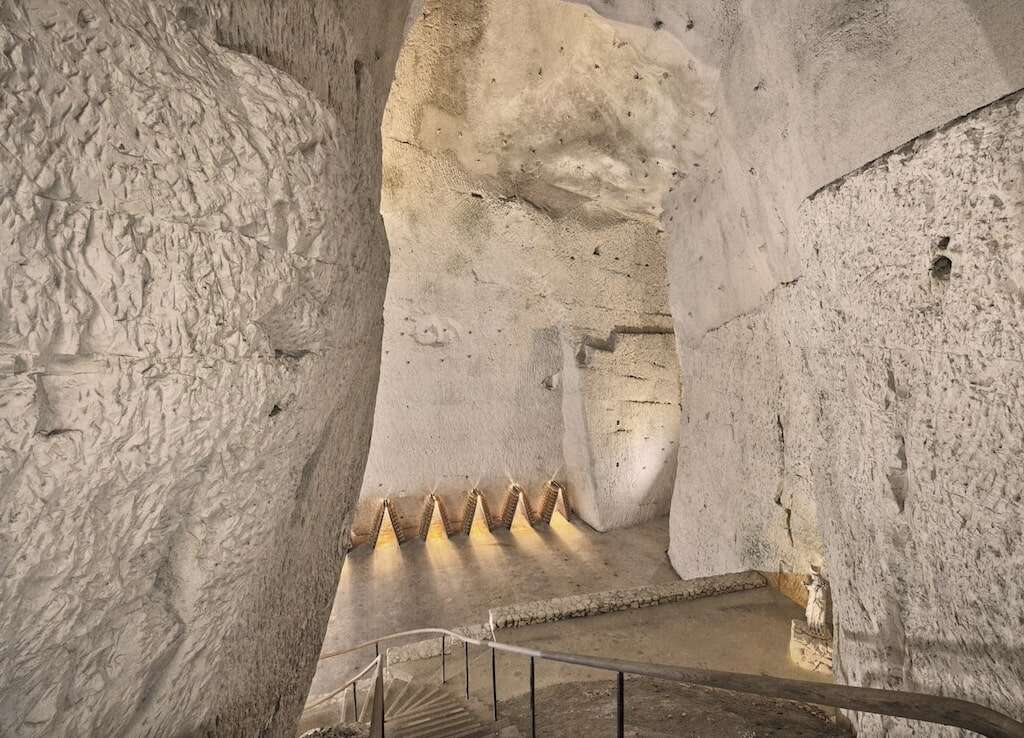
The Maison Ruinart story famously begins with Dom Thierry Ruinart, a scholarly Benedictine monk who, in the late 17th century, observed the rising fascination at the French court for vin effervescent. His nephew Nicolas Ruinart transformed that insight into an enterprise, establishing a maison that would pioneer techniques, traditions, and tastes that endure across centuries. Beneath Ruinart’s historic estate lies one of Champagne’s cultural treasures: its crayères. These towering medieval chalk quarries—now UNESCO-protected— form a labyrinth stretching five miles beneath Reims. For over two centuries the crayères have acted as the maison’s natural cellar, regulating temperature and humidity with effortless precision. Here, bottles mature slowly, quietly, shielded by the white chalk that has shaped the region’s terroir for millennia. Today, this deep history serves not as a museum piece, but as the foundation for Ruinart’s most daring modern chapter.
The Nicolas Ruinart Pavilion
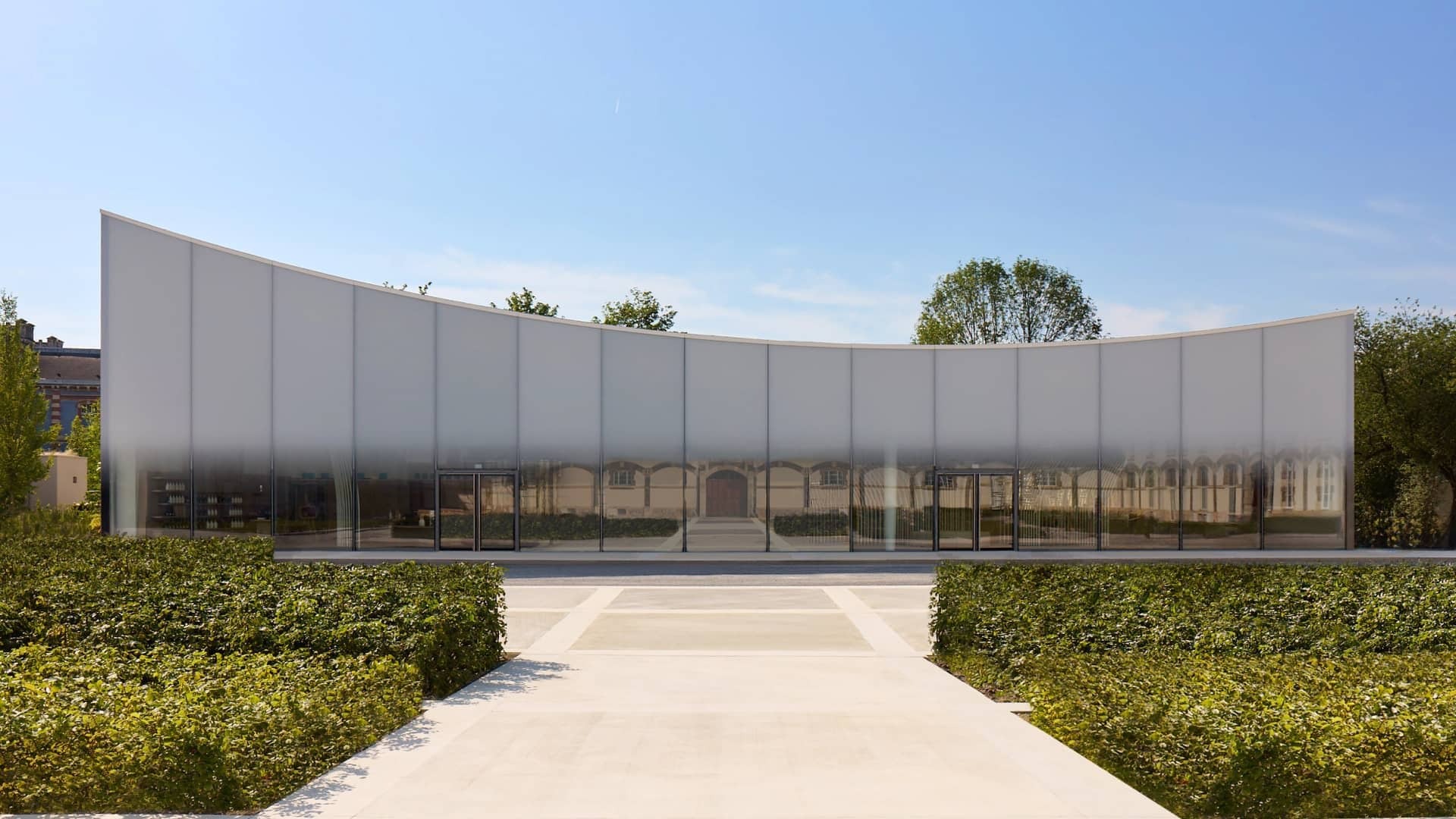
The maison’s newly unveiled heart, the Nicolas Ruinart Pavilion, is the work of acclaimed Japanese architect Sou Fujimoto. From the first glance, it is unmistakably futuristic: a sweeping, luminous structure crafted in glass, champagne-colored Soissons stone, and gentle, sculptural curves.
Fujimoto describes the design as a dialogue between symmetry and subtle imperfection, between architectural heritage and forward-looking imagination. The facade’s gradient, shifting from opaque white to pure transparency, evokes bubbles rising in a glass of champagne. Depending on the light, the pavilion appears to float, dissolve into the sky, or mirror the garden around it.
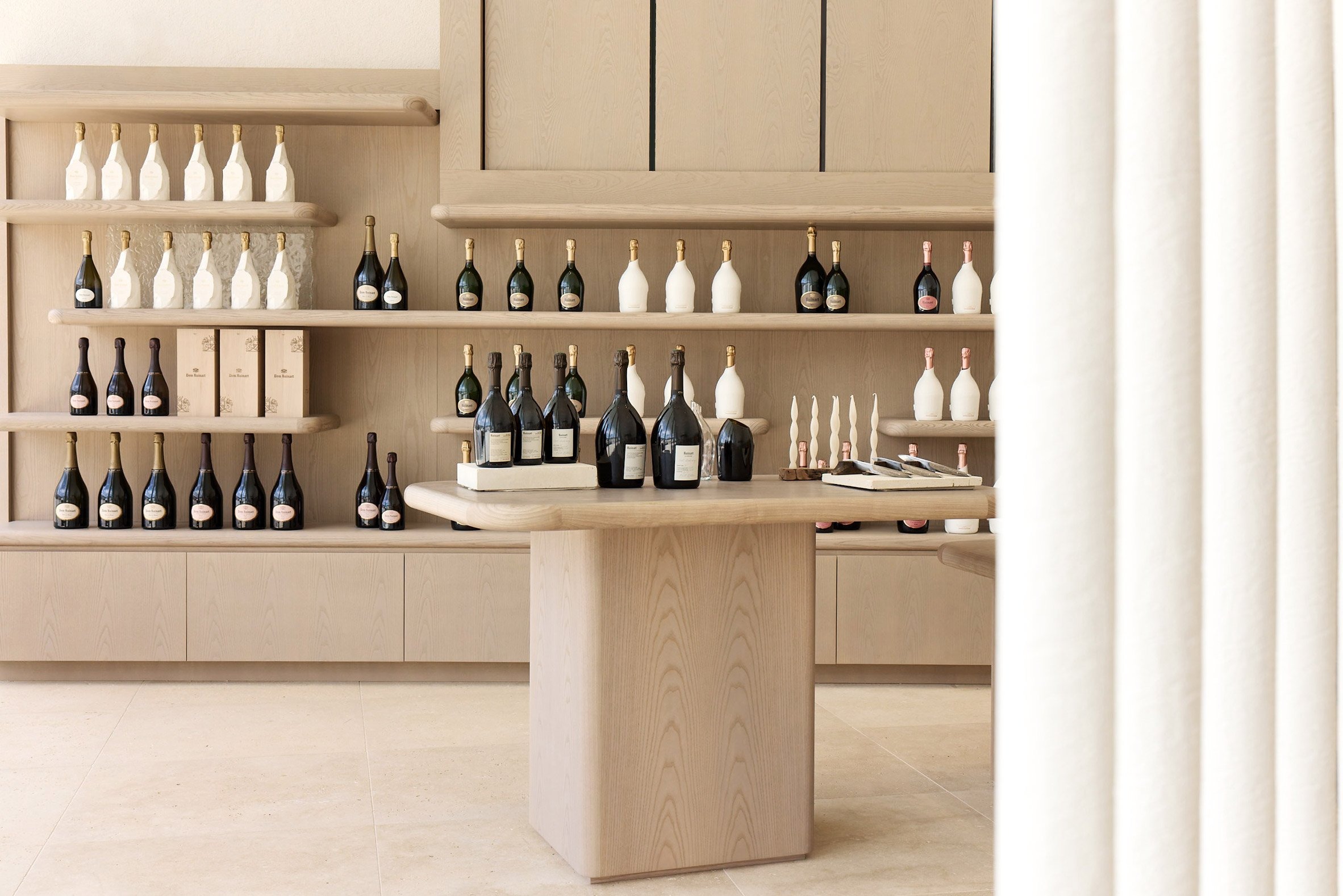
Inside, French designer Gwenaël Nicolas continues the conversation with nature. Spaces dissolve gently from boutique to lounge to bar to tasting rooms, defined not by walls but by fluid transitions. Tall white stems, crafted from innovative linen fibers, sprout organically from the floor, blurring boundaries between indoors and out. Nothing shouts; everything whispers.
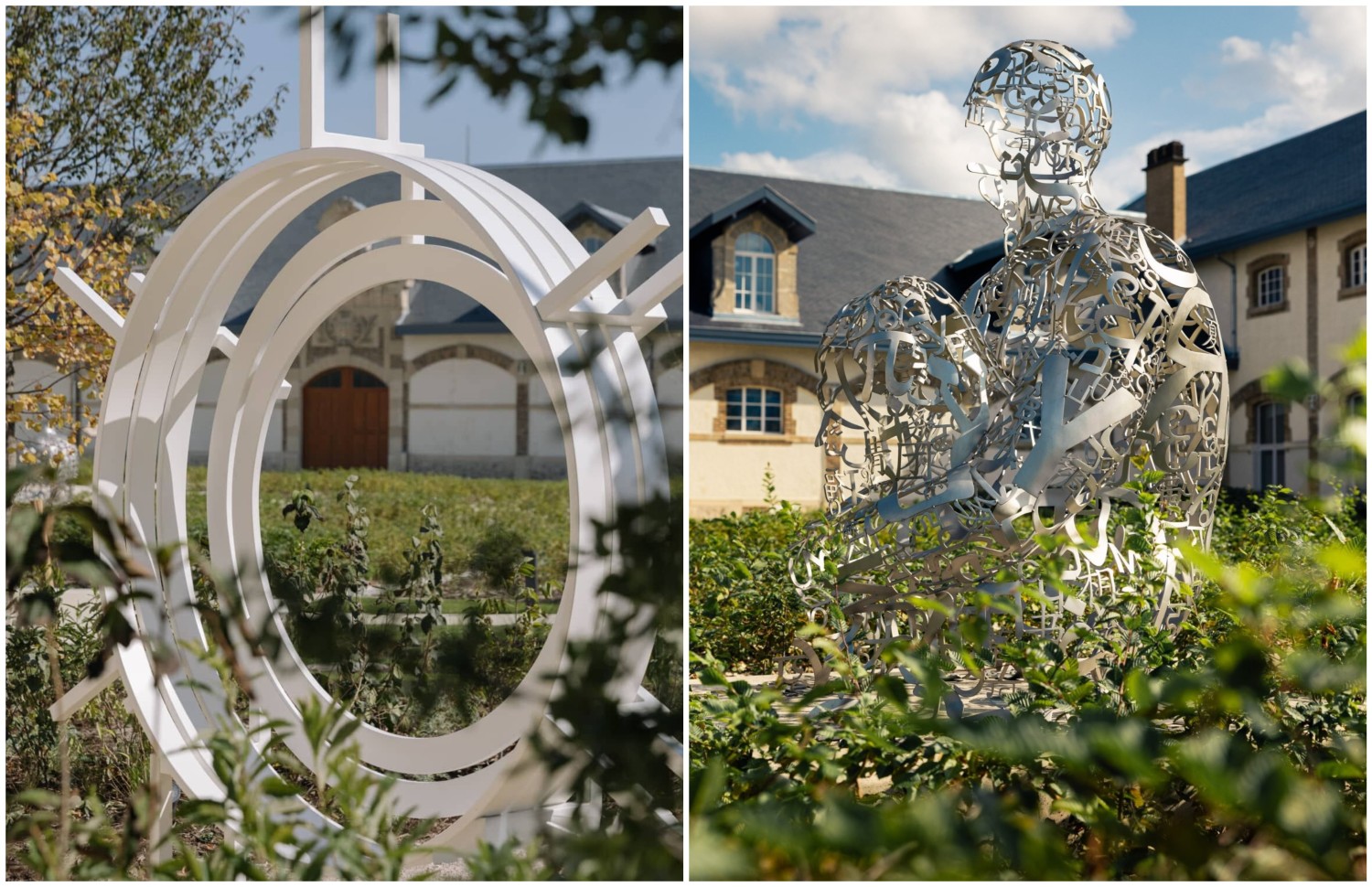
Ruinart has long championed the arts, collaborating with contemporary creators to reinterpret the maison’s codes. Under the leadership of Fabien Vallérian, director of arts and culture, the estate now includes a reimagined garden by landscape artist Christophe Gautrand, transformed into a living open-air gallery.
Among its installations is Marcus Coates’s Nature Calendar, a daily flag announcing an unseen moment from the natural world: migration patterns, seasonal shifts, ecological rhythms. It is a poetic gesture linking the vineyard’s biodiversity with the cultural sphere Ruinart nurtures so carefully.
This commitment to sustainability is not symbolic. The new pavilion generates 80% of its energy through geothermal and solar systems. Its walls are stone, not concrete. A green roof, supported by timber, enhances insulation and biodiversity. These choices reflect Ruinart’s evolving values: elegance intertwined with responsibility.
Heritage Reimagined, Rituals Renewed
Visitors entering the pavilion encounter a breathtaking view framed by the full-height glass wall, a tableau of the historic 19th-century maison, its gardens, and the subtle geometry of the courtyard. The space feels at once cathedral-like and intimate, a contemporary sanctuary for champagne appreciation.
One of Gwenaël Nicolas’s most evocative creations is a sculptural carousel of inverted Ruinart bottles rising from floor to ceiling, a metaphor for champagne flowing through time, from ancestral craftsmanship to modern creation. The carousel conceals the entrance to Ruinart’s new private cellar, an exclusive chamber reserved for the maison’s most distinguished guests. It is a wink to tradition, a gesture of mystique, an invitation to discovery.
For centuries, guests have approached champagne houses expecting châteaux, stone facades, and time-worn staircases. Ruinart disrupts this expectation. As Nicolas aptly notes, “We enter from the future.”
This shift is more than architectural. It signals a renewed vision of luxury: transparent, sustainable, artistically expressive, and deeply connected to place. For champagne lovers, it offers a rare duality, an encounter with both the oldest house in Champagne and one of its most revolutionary spaces.
Maison Ruinart’s reinvention is not a departure from its heritage, but its extension. It acknowledges that true luxury evolves, that it must breathe, innovate, question, and inspire. In Fujimoto’s floating curves, in Nicolas’s ethereal interiors, in the artworks dancing across the gardens, the maison has crafted a living testament to champagne’s past and its luminous future.