“Italian technique, Vietnamese ingredients and an unwavering belief in the people who produce them. At Si Dining, Chef Alessio Rasom is building more than a restaurant. Through close relationships with farmers, fishermen and local producers, he is exploring what Vietnam’s extraordinary ingredients can become when knowledge, craftsmanship and trust come together.” by Tracie May
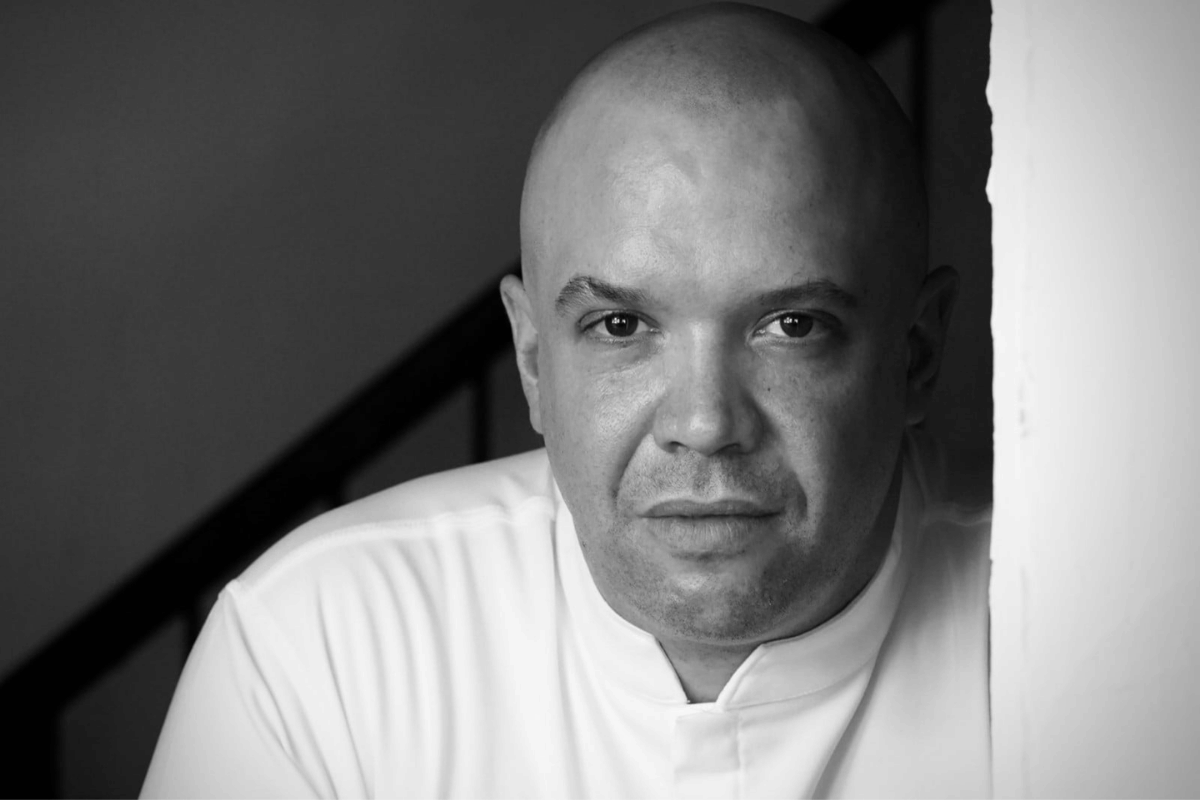
Vietnam’s gastronomic landscape is moving at extraordinary speed. Across the country, a new generation of chefs is looking beyond the plate, building closer relationships with farmers, fishermen and producers while asking bigger questions about provenance, quality and what it means to cook in Vietnam today.
At Si Dining, Chef Alessio Rasom has made this philosophy central to his kitchen. Born in the Dolomites in northern Italy and raised in a family of bakers and farmers, Rasom brings an instinctive understanding of ingredients and craftsmanship to everything he does. Yet his cooking is not about recreating Italy in Vietnam. Instead, Italian technique becomes a tool through which he explores the remarkable produce of the country he now calls home.
His curiosity takes him far beyond the kitchen. He works directly with farmers and fishermen, discusses processing and logistics, experiments with animal feed, studies ageing and preservation, and sometimes helps small producers understand how to formalise their businesses. For Rasom, improving a restaurant means strengthening the ecosystem around it.
It is an approach that has brought Si Dining significant recognition, including Michelin, Tatler and Gourmet Vietnam accolades. But awards, he insists, are not the destination. They are a responsibility to continue improving.
.png)
For Epicure Vietnam, Tracie May sits down with Rasom to talk about the lessons he carried from the mountains of Italy, the extraordinary bicycle journey that eventually brought him to Vietnam, the difficult beginnings of Si Dining, his relationship with Vietnamese producers and why the future of the country’s gastronomy may begin much further from the dining room than we imagine.
You grew up in the Dolomites, in a family of bakers and farmers. What from that childhood is still with you today?
More and more now, I understand my parents. They worked like hell, but I never heard my father complain that he was tired. He was the first to wake up, the first to arrive, the first to work. I carry this with me. If I lead my team and my family, I want to be there ahead of them, not finding excuses. People trust you when you show the way. Growing up around bakers and farmers also gives you a certain relationship with work and with ingredients. Things don’t just appear. Somebody has to grow them, raise them, make them. There is time and effort behind everything. I think this stays with you.
One of the most extraordinary chapters of your journey was cycling from Italy to Vietnam. What did that experience teach you?
The cycling was not the hardest part. The hardest part was leaving the comfortable bed, the hot shower, clean clothes, routine. One Christmas Eve in Greece, below zero, I stayed awake holding down the tent because the wind was so strong. At five in the morning, we packed everything in the dark with our water frozen. You learn that you don’t know where you will sleep tonight or what will happen tomorrow. You prepare, you use common sense, but you focus on the moment. Life is the same. Be prepared, focus on what you are doing, and things can go in the right direction. Maybe this also became part of the way I run restaurants. You can plan everything, but something will always happen. You need to react without losing where you want to go.
Si Dining feels like a very personal expression of your philosophy. What did you want the restaurant to become?
Si came just after COVID. We were trying to survive. It was almost revenge against the darkness — turning poison into medicine. We had almost no budget, just trust, some help and a lot of energy. Si became my life jacket. I couldn’t pretend to be somebody else, so I put myself into everything: the design, the food, the management, the philosophy. Later, it became bigger than me because the team, the suppliers and the Vietnamese people around us believed in it too. Without them, I could do nothing. That is important because a restaurant is never only the chef. Maybe people see the chef, but behind every plate there are so many people. The team, the farmer, the fisherman, the person transporting the product — everybody is part of it.
.png)
Through A&U Restaurant Management, you are also helping other chefs develop their own restaurants. Why is that important to you?
Because I know how difficult the beginning is. If I can help a talented chef avoid some of the mistakes and dark moments I went through, that gives me huge satisfaction. A&U is not only consulting. We try to create a sustainable way to build restaurants, support the local economy and keep this craftsman idea alive. A restaurant needs creativity, but creativity alone is not enough. It needs structure, management and a way to survive. If you help chefs build this foundation, then they have more freedom to concentrate on what they are really good at.
Michelin, Tatler, Gourmet Vietnam — Si Dining has received significant recognition. What do awards mean to you?
Of course they matter. We are very proud. But we didn’t work to catch awards. They came to recognise what we do every day. For me, an award is also a promise. Somebody gives their trust to your restaurant, so you have to keep that trust. We don’t celebrate too much. Our way of celebrating is to do better — service, product, wine, management — one step every day. The dangerous thing would be to start cooking for an award. Then maybe you lose yourself. We should never change who we are just to keep an award.
There is something very special about sitting at a chef’s table and simply saying, “Feed me.” What does that level of trust mean to a chef?
This is what every chef dreams about. You give trust and say, express yourself. A restaurant needs menus and structure, and of course we cannot do this with everybody, but behind that structure we are free. When I know the guest, I know what arrived that morning, what they like and what they don’t like. Then we simply try to do the best we can at that moment. It becomes a conversation. Maybe there is something beautiful from the fisherman that morning, or a vegetable that is perfect that day. Instead of forcing it into a menu, you can respond to it. That freedom is very special.
.png)
Your relationships with fishermen and farmers have become an important part of Si Dining. How do you build that trust, and how do ideas such as your seaweed-fed lamb develop?
The answer is communication. The farmer, the fisherman and the restaurant are different worlds. We try to be the bridge. It is much more than buying a fish and cooking it. We work on processing, safety, ageing, logistics, even helping producers become legal companies so they can sell to other customers. This gives them autonomy, and the trust becomes stronger. Then we look at the best products in the world and ask why they are good, and how that knowledge can be adapted to Vietnam. The lamb was inspired by European salt-marsh lamb. We tested the seaweed slowly with the farmer. With chicken, pork and tuna, it is the same. You test, observe and adjust. Vietnamese producers already have incredible knowledge. Sometimes my job is not to teach. It is to listen, then give them the means to make the best possible product. And if what we learn can help them sell to other restaurants as well, even better. The objective should not be to keep everything for ourselves. If the producer becomes stronger, everybody benefits.
Your cooking is unmistakably Italian in technique, yet deeply connected to Vietnam. How do you bring those two worlds together without forcing the idea of “fusion”?
We use Italian technique and the Italian way of looking at a product, but to highlight Vietnamese ingredients. Maybe the fusion is not in the dish. Maybe it is in the technique. Langoustine is a great example. Vietnam has fantastic langoustine, but cooked the usual way it can become tough. With European technique, gentle cooking, and using the head for a juice or bisque, suddenly you see how beautiful this Vietnamese product is. We are not trying to make it Italian. We use what we know to show what the ingredient can be. For me, respecting a local ingredient does not mean you can only cook it in the traditional way. Respect can also mean understanding it deeply enough to find another way to reveal its quality.
.png)
Vietnam’s gastronomic scene has evolved remarkably in recent years. What needs to happen next?
Vietnam is in an incredible moment. The world is finally recognising its gastronomy, and not only phở and bánh mì. But the country is still very green, in a good way. Farmers and fishermen still carry knowledge that has disappeared in many places through industrialisation. Now there is a choice. If chefs, hotels, journalists, tourists and the industry understand the richness that still exists in the countryside, Vietnam can decide how it wants to grow. The danger is always that development means everything becomes standardised. But Vietnam still has incredible diversity. Different regions, different climates, different products and different traditions. If this is protected while quality continues to improve, Vietnam can become not only a food destination, but maybe even a school for other countries in quality, diversity and local production. It is a big challenge, but a very big opportunity.
Finally, is there enough exchange of knowledge between chefs in Vietnam today?
I’m not really a social person. I come from the mountains — we are not very social people! But yes, we speak, message, call, observe what others are doing and share ideas. Probably not enough, because everybody is busy. But we need different points of view. Nobody knows everything. Another chef can look at the same product and see something completely different. A farmer knows things I don’t know. A fisherman knows things the farmer doesn’t know. This exchange is where things become interesting. It happens quietly, between chefs and friends, and it is very important. For Vietnam to keep moving forward, I think we need more of this. Not everybody doing the same thing, but everybody learning from each other while keeping their own identity.
.png)
For Rasom, that identity ultimately comes back to something deceptively simple: trust. Trust between the chef and the guest who is willing to say, feed me. Trust between a restaurant and the producer willing to experiment with a different way of raising an animal, handling a fish or delivering an ingredient. Trust within a team prepared to build something together, even when the path ahead is uncertain. At Si Dining, Italian technique may provide the vocabulary, but increasingly, Vietnam provides the story. And perhaps that is what makes Rasom’s approach particularly relevant at this moment in the country’s culinary evolution. Rather than asking how Vietnamese ingredients can imitate the great products of Europe, he is asking a more interesting question: how good can they become when their own qualities are understood, respected and given the right conditions to shine? The answer is still being written — on farms, at sea, in kitchens and, ultimately, on the plate.