“For Chef Võ Thành Vương, Vietnamese cuisine is a living archive — shaped by the sea, family tables and knowledge passed quietly through generations. With LƯU TÍCH, his latest tasting menu at CoCo Dining, he explores how these culinary memories can be preserved, reinterpreted and carried forward.” By Jade Huynh
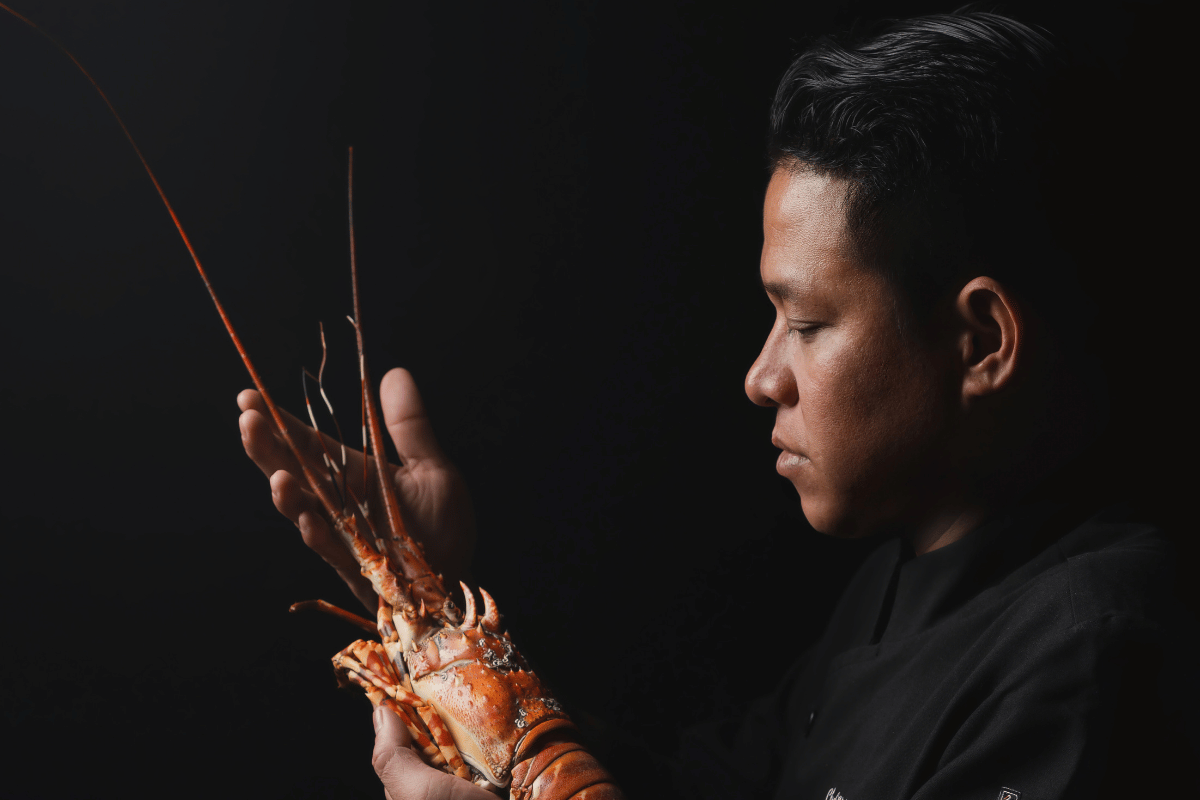
You grew up in a fishing village in Phan Thiết. What memories of the sea still find their way into your cooking?
I remember the scent of salt and sunlight, and fishermen leaving for sea and returning with their catch. The freshness of seafood fascinated me from an early age. Later, I realised those experiences taught me my first lesson in cooking: understand an ingredient and respect its natural character. With seafood, I try to preserve the “voice of the sea”, so guests taste something of its place, season and memory.
Your mother gave you some of your earliest lessons about food. What did she teach you beyond cooking itself?
My mother taught me that cooking is a form of care. Our family meals were about sitting together, sharing stories and being present around the same table. That has stayed with me. A course can be technically precise, but it should also create warmth. Food becomes memorable when it creates connection.
Cooking began as a job rather than a childhood ambition. When did it become your creative language?
There was no grand dream at the beginning. It was simply work. But the more I cooked, the more curious I became about ingredients, transformation and the stories food could tell. Gradually, cooking became a way to express my memories, thoughts and perspective.
.png)
Your cooking combines research with memory and instinct. How do you balance the two?
I begin with research — the people, ingredients and traditions behind a course. But eventually, I have to ask whether it genuinely resonates with me. Research gives a dish its foundation; emotion gives it life. I keep working until the two come together.
What does LƯU TÍCH represent to you personally?
LƯU TÍCH is an opportunity to look back at everything that has shaped me. I have travelled, learned different techniques and experienced many flavours. Yet the further I travelled, the more I realised that things I thought I had forgotten were often the most important. LƯU TÍCH looks at Vietnamese cuisine through traces left over time — how people cultivated ingredients, fermented food, made fish sauce and used what nature provided without waste.
What first inspired you to transform the idea of “traces” into an entire tasting menu?
It began with small memories: fish sauce, a particular herb, ingredients drying beneath the sun, or something my mother once cooked. They were ordinary things, yet they remained with me. It made me wonder: if a dish can preserve a memory, could a tasting menu become a living archive? LƯU TÍCH grew from that question. I am not simply preserving traditional dishes, but their spirit, and allowing it to move forward.
.png)
You describe Vietnamese cuisine as a “living archive”. How do you make it contemporary without losing its soul?
You have to understand something deeply before changing it. When you understand why an ingredient was used, why a technique developed or why a region tastes the way it does, you recognise what must remain. Presentation, texture and technique can evolve, but the essential flavour and story cannot. I want guests to taste my food and still recognise Vietnam.
Was there a discovery during your research for LƯU TÍCH that particularly changed your perspective?
Fermentation fascinated me. Vietnamese fermented sauces are not simply about flavour; they bring together time, climate, patience and generations of knowledge. From salting fish to fermentation and drying, seemingly simple processes reveal extraordinary depth. With LƯU TÍCH, I want to tell not only the story of what Vietnamese people eat, but how we have preserved flavour and memory through time.
Which course from LƯU TÍCH feels most personal to you?
The mâm cơm, the Vietnamese family meal. It connects all three seasons — RA KHƠI, LỮ HÀNH and LƯU TÍCH. A mâm cơm is more than several dishes placed together. Each element complements another, creating the spirit of a Vietnamese meal. I want guests to recognise that familiarity and intimacy, while experiencing it through my own perspective.
.png)
How do you know when an ingredient should be left almost untouched?
I ask myself a simple question: does this ingredient really need my intervention? When something is at its best, restraint becomes even more important. Sometimes a little salt, heat or a simple technique is enough. My role is not always to transform an ingredient, but sometimes to let it speak.
When reinterpreting tradition, what should never be changed?
The soul of the flavour. Presentation, technique and texture can evolve. But if a Vietnamese guest tastes something and no longer recognises the memory behind it, I have gone too far. Creativity must retain a thread connecting the new expression to what came before. Reinventing tradition is not about erasing the past, but allowing it to live again.
CoCo Dining earned its first MICHELIN Star in 2025 and retained it in 2026, alongside recognition from the Gourmet Vietnam Awards. Has recognition changed your responsibility as a Vietnamese chef?
Awards do not make me want to cook differently. They make me more careful, because I understand that my work contributes to how people see Vietnamese cuisine. Rather than pursuing “internationalisation”, I want to look deeper into Vietnamese identity — rediscovering ingredients and recognising the quiet knowledge of farmers, fishermen, fish sauce makers and salt makers. For me, the greatest recognition is when an international guest leaves CoCo Dining and says: “Today, I understand Vietnam a little better.”