For Chef Nguyễn Đăng Kỷ Cương - better known as Chef Eddie - omakase is far more than a tasting menu. It is a relationship built on trust.
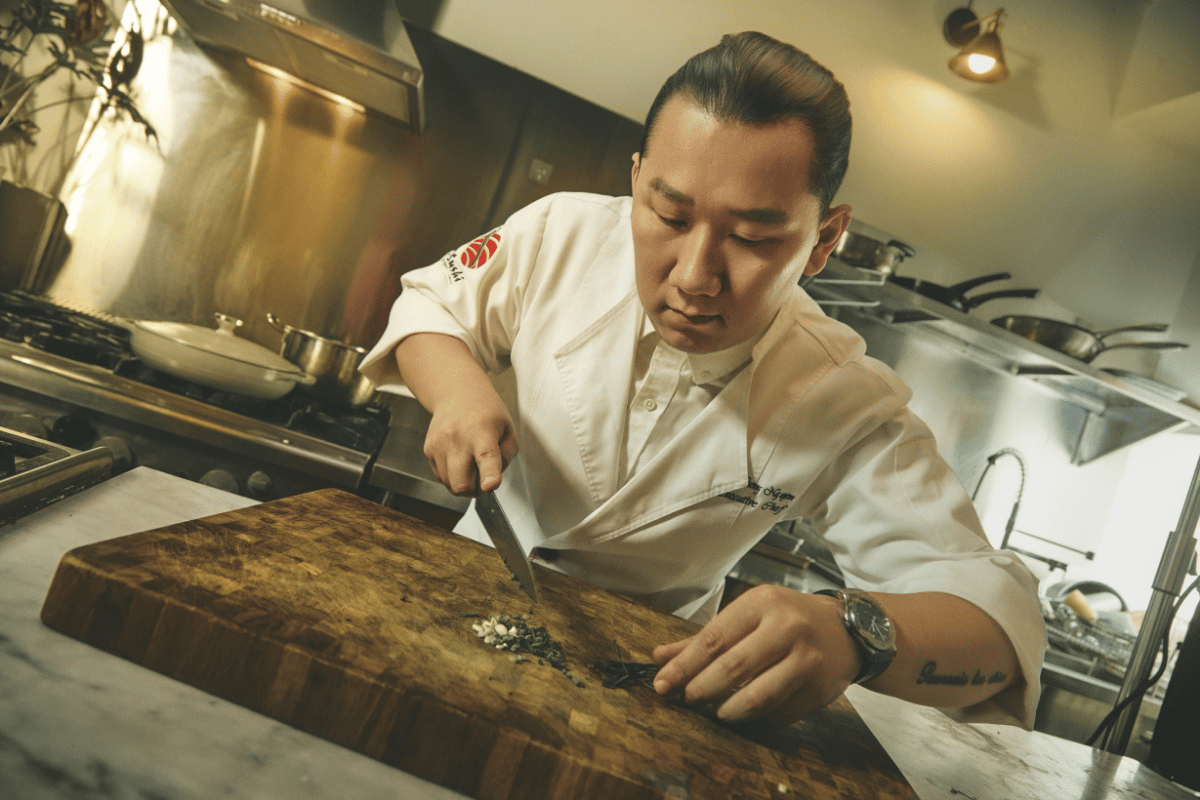
“When someone takes a seat at my counter, they are entrusting me with their entire evening,” Chef Eddie shares. “There is no printed menu. There is only trust, and my responsibility is to honour it with every dish I serve.”
His journey began in 2006 in Australia, long before omakase became a mainstay for Saigon diners. That pivotal year taught him the honesty of Japanese cuisine. “What captivated me wasn’t the ritual or ceremony. It was its honesty,” he recalls. “I realised that exceptional ingredients, treated with respect, precision, and restraint, require very little else.”
Two decades later, at his reservation-only counter in Khánh Hội, that year anchors his signature tasting experience: the 2006 Menu, a twenty-one-course journey. Across his seasonal tiers, he bridges two distinct worlds - the structural discipline of Japanese culinary techniques and the deep-rooted memory of Vietnamese soul.
Is there one dish that best represents that meeting of cultures?
.png)
There are several. My sashimi course is served in four different expressions, and one of them introduces the Vietnamese way of enjoying raw seafood alongside the Japanese tradition. I use fish sauce, but reinterpret it as a delicate sorbet. It surprises people, yet it feels familiar at the same time. Another favourite is my chawanmushi inspired by phở. In Vietnam, many people enjoy adding a poached egg to their bowl of phở. That everyday memory became the starting point for a Japanese savoury custard, which I elevate with A5 Wagyu and caviar. It’s comfort, nostalgia and refinement served together.
There is also a sense of humour hidden within your menu.
Always. Food should make people feel something. Sometimes it’s nostalgia, sometimes it’s curiosity, and sometimes it’s simply a smile of recognition. My puffer fish soup is inspired by bánh canh cá nóc, with a little play on words that only Vietnamese diners immediately understand. Those subtle moments create a deeper connection with the guest.
Many chefs today rely on theatrical presentations. Your approach feels remarkably restrained.
.png)
Technique should never become the performance. It exists to honour the ingredient and enhance the flavour. It should never distract from it. If guests remember the food rather than the tricks, then I’ve done my job.
So there are no magic tricks behind your omakase?
(Laughs.) No magic tricks. Just honest food, guided by the chef. If, by the end of the evening, I’ve earned my guests’ trust, then that’s the greatest compliment I could receive.