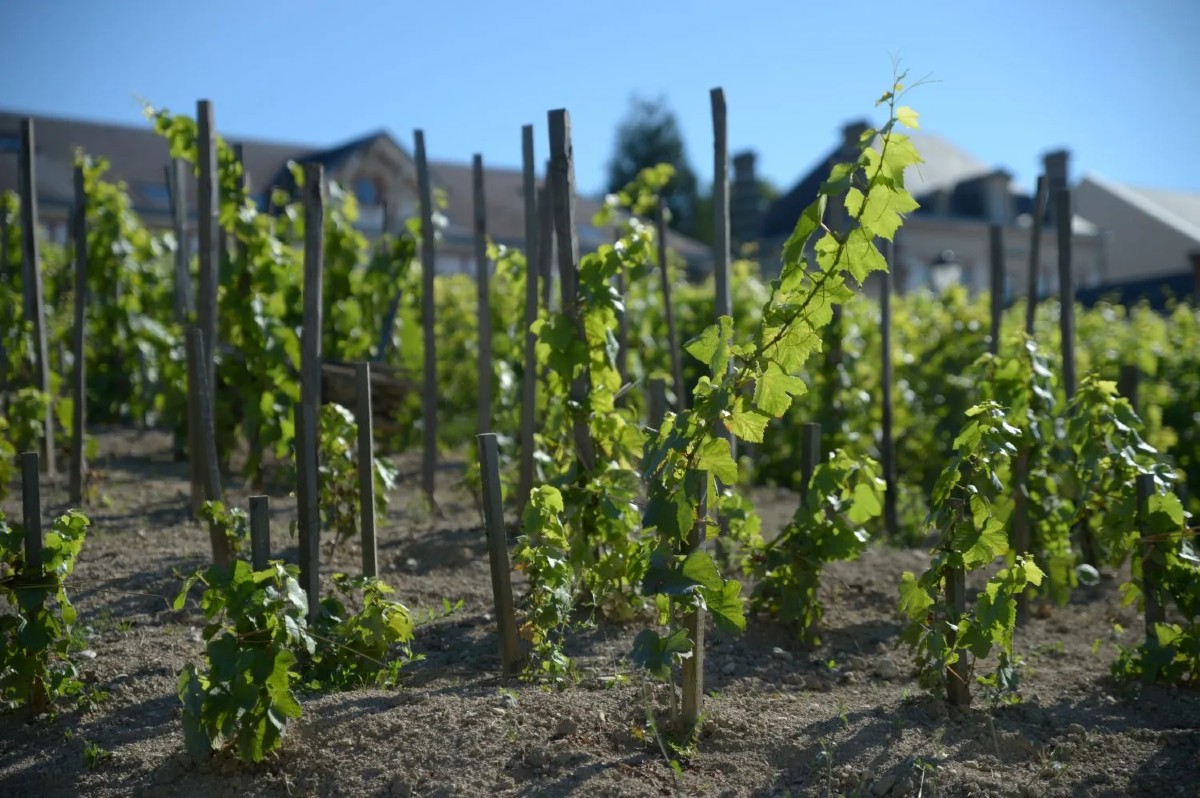
There are champagnes that speak of celebration, and then there are those that whisper of time itself. At Champagne Bollinger, a quiet trilogy of cult cuvées emerges not from abundance, but from scarcity, wines shaped as much by landscape as by fragility.
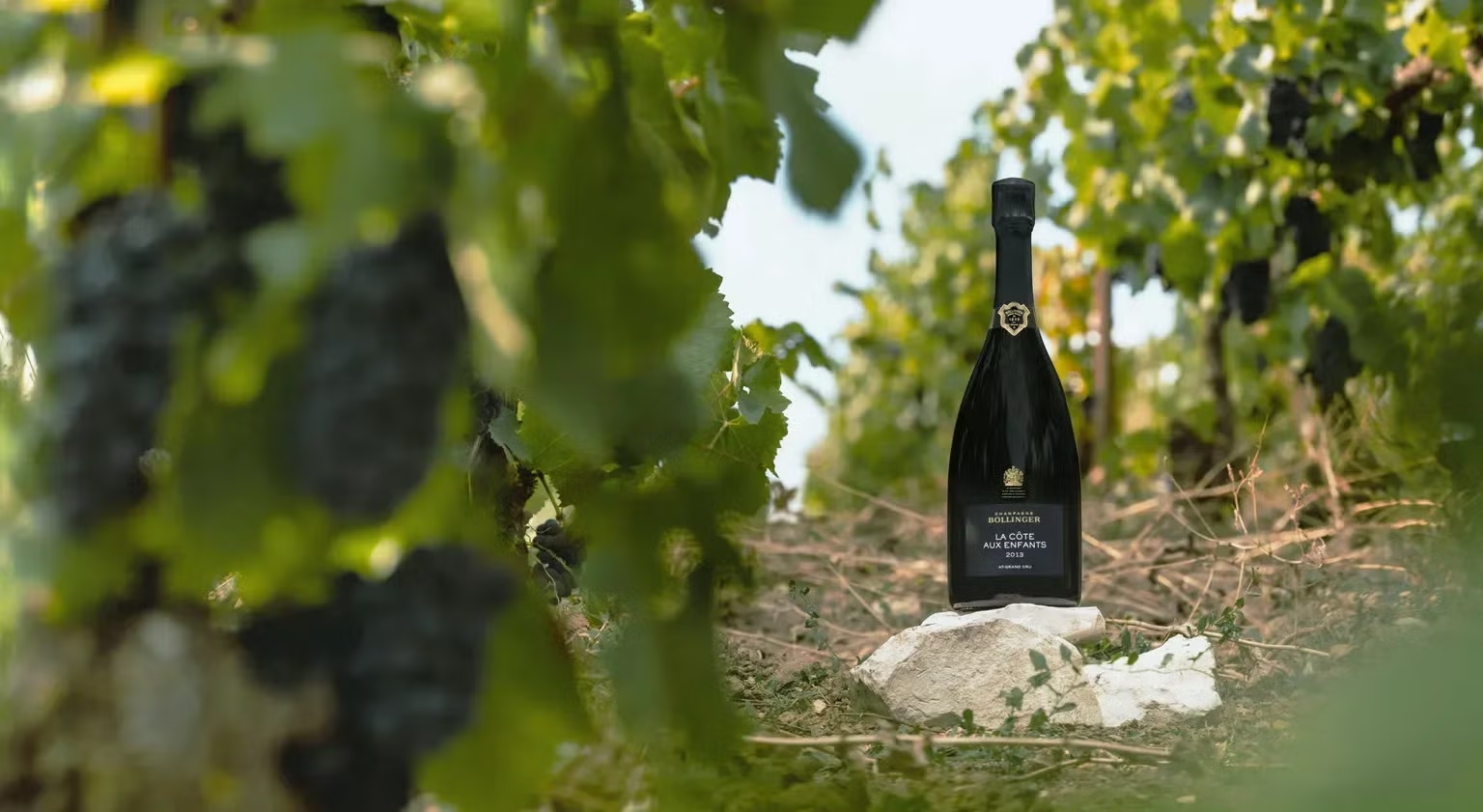
It begins at La Côte aux Enfants, a steep, almost defiant vineyard in Aÿ. Its chalky incline feels closer to a climb than a stroll, a place where history lingers in every footstep. From this singular plot come two expressions: a still red Coteaux Champenois and a blanc de noirs champagne, each released only in the most favorable vintages.
The red, vinified in a Burgundian spirit, unfolds with dark cherry, blackberry, and a silken depth that feels both generous and restrained. The champagne, produced in fewer than 5,000 bottles, carries a tension between freshness and quiet power, a reflection of its cool northern slopes.
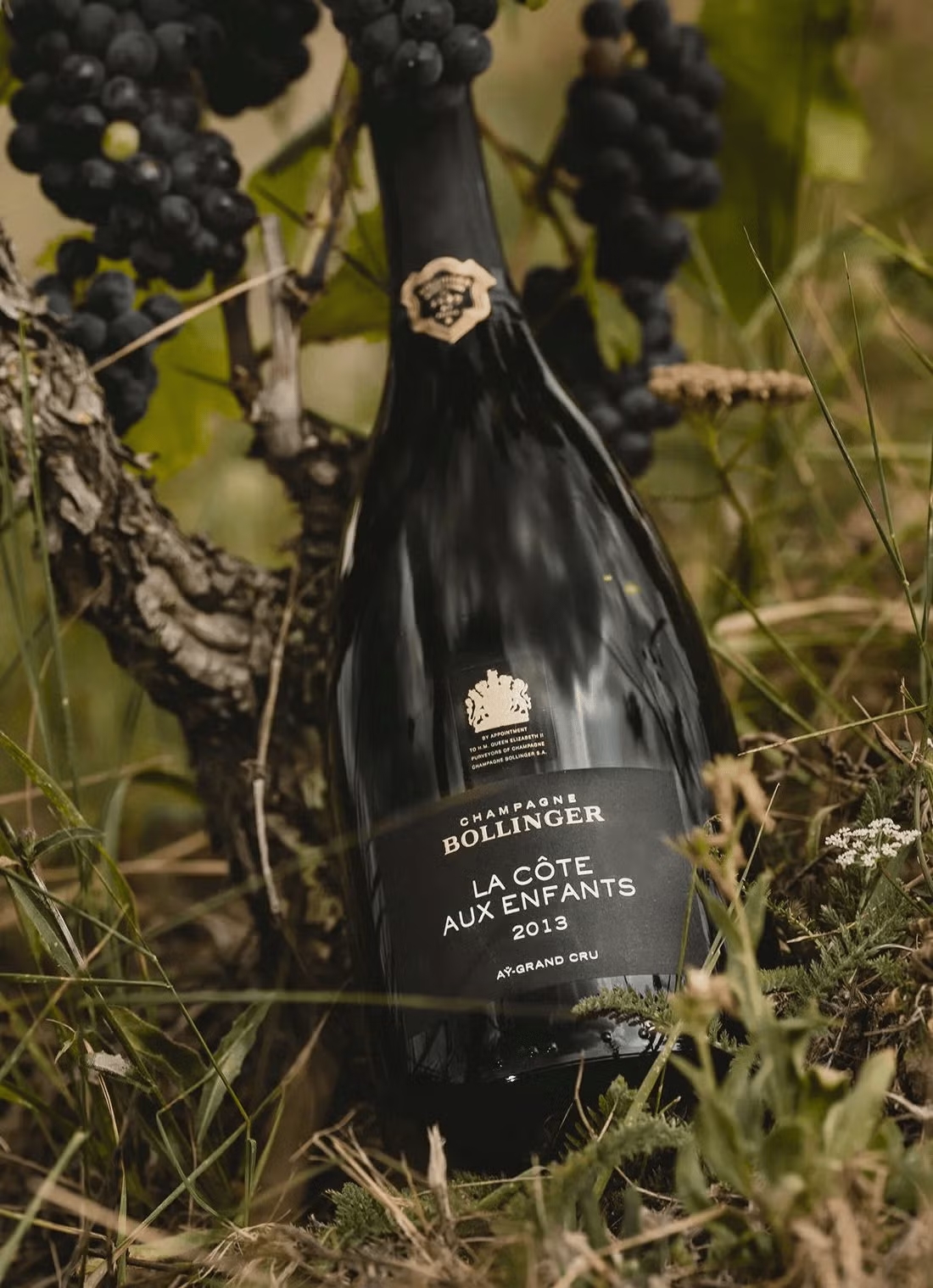
Yet even these rare bottles are eclipsed by Bollinger’s most elusive creation: Vieilles Vignes Françaises. Drawn from two tiny plots of ungrafted vines—survivors of the phylloxera crisis that reshaped European viticulture—this cuvée exists in near-mythical quantities. A typical vintage yields barely 2,000 bottles, though even that number is slowly fading. Warmer winters and shifting climates now threaten what little remains, turning each release into something closer to a farewell than a continuation.
To taste these wines is to step into a disappearing world. Layers of toasted hazelnut, dried fruit, and spice unfold with a quiet intensity, carried by the concentration only ancient vines can offer. They are not wines to collect indefinitely, but to experience, moments captured before they slip beyond reach.