You do not need a professional, climate-controlled cellar to care for your wine properly. A bottle can retain its intended depth, balance, and character when protected by three quiet disciplines: keeping it cool, keeping it dark, and keeping it still.
.png)
For many people, wine simply settles into the nearest convenient space, lined up on countertops, tucked onto open shelves, or left within the daily rhythm of the kitchen. This ordinary habit has helped sustain a persistent myth: that proper storage requires a professional cellar. In truth, most bottles do not need elaborate conditions to remain true to themselves. They simply need protection from the small environmental pressures that gradually alter them over time.
The first rule is to avoid heat. Warm temperatures force wine to age too quickly, flattening its structure and softening the character. In more severe cases, heat can leave a bottle tasting tired or slightly cooked. A space that remains reliably cool, ideally between 55 and 65°F, will serve wine far better than one that shifts between warm afternoons and cooler evenings. This is why bottles should be kept away from ovens, dishwashers, radiators, heating vents, and sun-struck walls. The top of the refrigerator, despite its popularity, is among the worst places of all, combining both heat and vibration.
.png)
Light is the second threat. Prolonged exposure, especially to ultraviolet rays, can prematurely age wine and quietly diminish its aroma and freshness. White, rosé, and sparkling wines are often more vulnerable, particularly when bottled in lighter glass, though reds are by no means immune over time. The best solution is simple: store wine in dark spaces such as closed cabinets, pantry shelves, or solid storage bins, and keep display bottles away from windows and harsh artificial light.
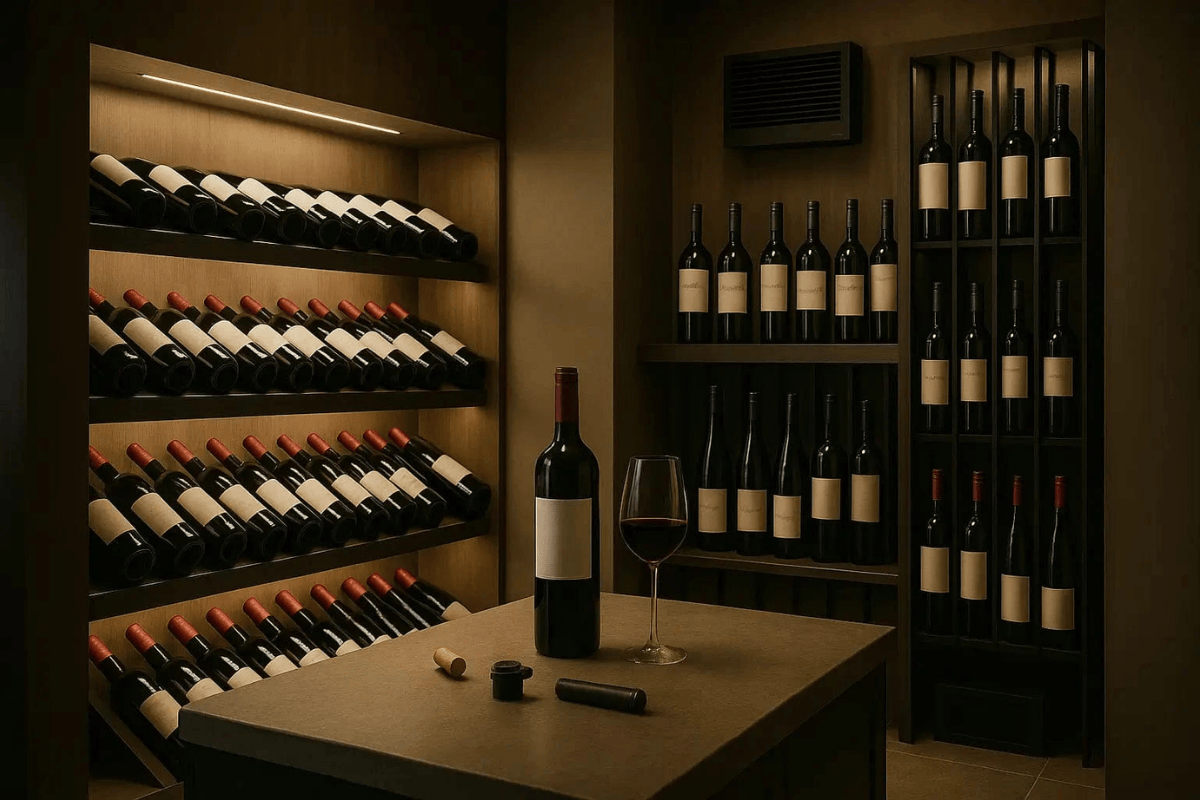
The third rule is motion. Wine shows itself best when left in stillness. Constant vibration from household appliances, speakers, or busy walkways can interfere with its natural development and, in older bottles, prevent sediment from settling properly. Occasional movement is harmless, of course, but wine should not live in places defined by constant disturbance.
.png)
So where does this leave the average home? In most cases, the best storage spots are surprisingly modest: an interior closet shelf, the bottom of a wardrobe, a cool pantry corner, or even under-bed storage in a closed case. If a home tends to run warm, or if a collection begins to grow, a wine fridge may be worth considering.
A few final details matter. Cork-sealed bottles should be stored horizontally to help keep the cork moist and reduce the risk of oxidation, while screwcap bottles can stand upright without issue. Short-term refrigeration is perfectly suitable for chilling a bottle before dinner, but long-term storage in a standard kitchen fridge can dry out corks and gradually mute flavor.
.png)
In the end, impeccable wine storage does not demand perfection or expensive racks. By simply keeping your bottles cool, dark, and still, you guarantee a flawless pour every time.